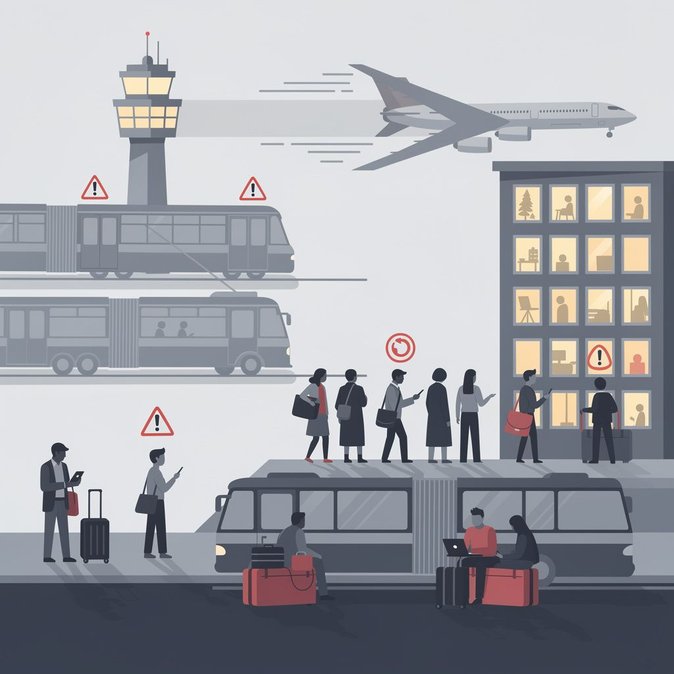
Strike-tracking platform StrikeTracker confirmed on 21 November that Belgium’s three main union confederations (FGTB/ABVV, CSC/ACV and CGSLB/ACLVB) will proceed with a 24-hour national day of action on Monday 23 November. While national rail operator SNCB expects to run a near-normal timetable, heavy disruption is forecast for urban transport: Brussels metro, trams and buses (STIB/MIVB) will operate a skeletal service, and regional operators De Lijn (Flanders) and TEC (Wallonia) have announced reductions of 50-70 %. Public-sector participation means ancillary services such as municipal administration, some immigration offices and passport counters could be short-staffed. Airports are not covered by the strike notice, but Brussels Airport has warned that staff absenteeism among security subcontractors could lengthen screening queues, especially at early-morning peaks. The unions are protesting wage-indexation caps and calling for stronger purchasing-power measures as energy-price support tapers off. Employers with posted workers or cross-border commuters should anticipate higher car traffic on the R0 ring and limited parking near the EU quarter where a 10:30 rally will march from North Station to Schuman. Global-mobility teams are advised to: 1) encourage tele-work where possible; 2) pre-book taxis or ride shares for essential site visits; 3) allow at least two hours for air-side formalities at BRU; and 4) brief travellers on peaceful-assembly hotspots that could delay last-mile journeys. Companies should also verify whether residence-permit or visa-collection appointments fall on 23 November and, if so, seek rescheduling immediately. Although Belgium’s transport strikes rarely turn violent, they can cascade across neighbouring supply chains when lorry drivers join solidarity actions. Freight shippers routing via Antwerp or Zeebrugge should monitor port-access roads for spontaneous blockades.
Source: StrikeTracker