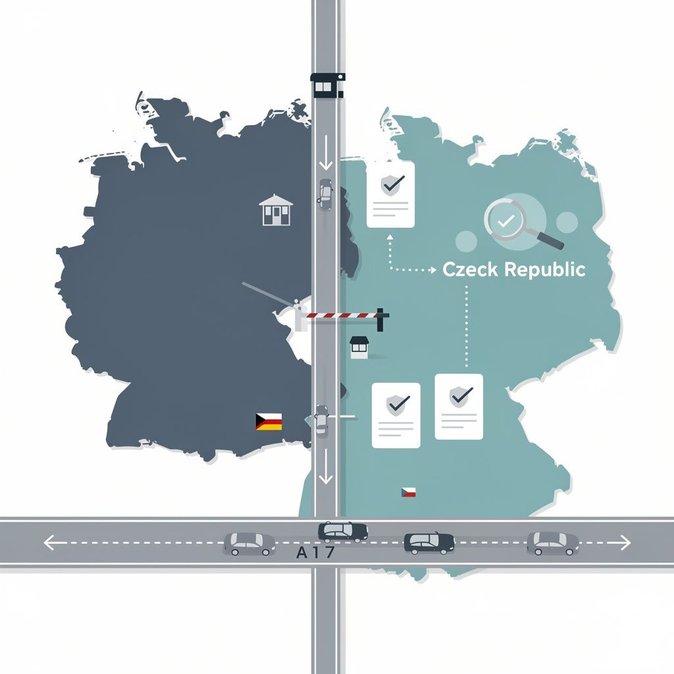
Germany’s Federal Foreign Office has completed its scheduled autumn review of the country-specific travel and security advice for Czechia, publishing a refreshed notice late on 20 November 2026. Although the advisory leaves the overall risk rating for the Czech Republic unchanged, it places new emphasis on the temporary Schengen-internal border controls that Berlin re-introduced in September 2024 and has rolled over several times since. The controls, carried out by the Bundespolizei at major road and rail crossings and through mobile patrols in the wider frontier zone, are framed as targeted, risk-based ID checks aimed at disrupting irregular migration and cross-border crime rather than as a hard closure of the border. For corporate mobility teams and frequent business travellers the practical impact remains limited but tangible. Motorists on the busy A17 Dresden–Prague corridor and on secondary roads in Saxony and Bavaria can encounter short queues when officers stop vehicles to verify passports or national ID cards; coach passengers may see spot checks on board. Travellers are therefore advised to keep documents readily accessible and to allow extra buffer time, especially when heading to time-sensitive meetings or airport connections in either country. Crucially, the advisory confirms there are no new visa requirements or quarantine rules: entry into Czechia continues to follow standard Schengen practice for short-stay visits. Inside Czechia, the updated German notice flags the usual urban-tourism risks—pick-pocketing on Prague’s trams, theft from parked cars, and tourist-price scams—but also reminds visitors that Czech police have broad powers to demand identification and issue on-the-spot fines. Companies arranging assignee moves or short-term projects should brief travellers to carry identification at all times and to request receipts for any fines paid. For longer stays outside hotels, the advisory reiterates the obligation to register with the foreign police within 30 days, an often-overlooked step for intra-company transferees renting private accommodation. From a compliance standpoint, the continued German checks mean that employees shuttling between offices in Dresden, Munich or Regensburg and facilities in Prague, Pilsen or Brno could face intermittent delays. Mobility managers should factor the risk into scheduling and consider using rail where possible—east-bound ICE services have so far seen fewer inspections than road traffic. Logistics firms moving time-critical goods should equally allow extra lead time at freight crossings. The German advisory will be reviewed again in early 2027. Until then, HR and travel departments should monitor updates from the Auswärtiges Amt and the Federal Police, as well as reciprocal information from the Czech Interior Ministry, in case security conditions trigger tighter controls or, conversely, allow a return to normal Schengen procedures.
Source: The Traveler