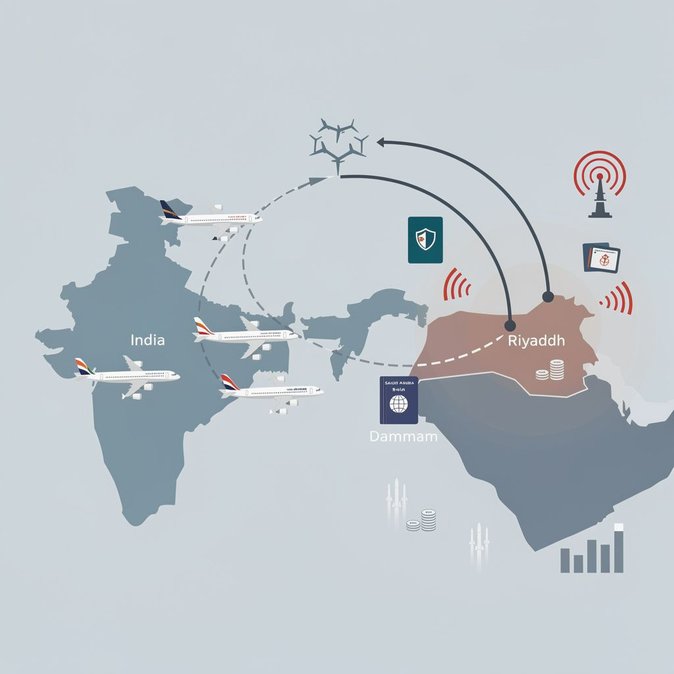
Airspace Times’ live disruptions dashboard, updated at 17:01 UTC on 21 November, shows Air India and Air India Express flights to Riyadh and Dammam suspended until at least 30 November, with Jeddah services tentatively resuming on 22 November. IndiGo and new entrant Akasa Air have enacted similar extensions, while foreign carriers such as KLM and Air France have cancelled Saudi routes well into January 2027 following Houthi missile attacks on Riyadh’s King Khalid International Airport on 15 November. For corporate travel planners, the rolling suspensions are disruptive: India–Saudi frequencies had only just recovered to 88 per cent of pre-pandemic levels, driven by project workers and medical travellers. Employers must now re-route staff via Dubai or Doha, adding costs and potential transit-visa requirements. Cargo operators face parallel headaches. Pharmaceutical exporters from Hyderabad’s Genome Valley report hold-ups of temperature-sensitive consignments originally routed on Air India narrow-bodies to Dammam. Spot freight rates to Saudi destinations via Qatar Airways have jumped 22 per cent week-on-week. Risk insurers classify Saudi airspace as “elevated threat” until credible evidence emerges that missile-defence systems can guarantee safety. Policyholders should review force-majeure clauses: some war-risk insurers now exclude cover for flights within 250 km of Yemeni or Iraqi borders. The episode underscores a broader regional trend: Gulf security incidents increasingly exert direct operational and financial pressure on Indian carriers and their corporate customers. Mobility teams should maintain alternative routings and ensure travellers have multi-entry UAE visas where necessary.