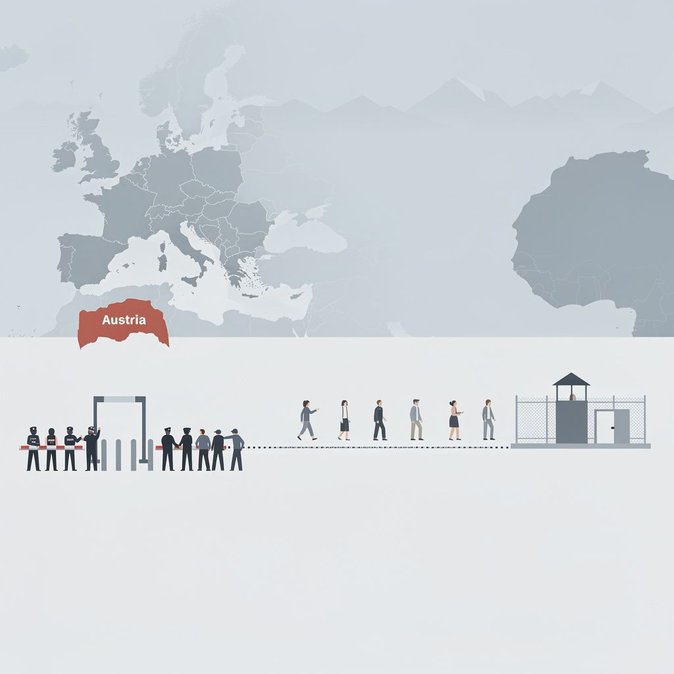
Austria’s Interior Ministry on Sunday, 22 November, announced that 13,411 migrants had left the country between January and October, nearly half of them through enforced deportations. The figure already exceeds the total for the whole of 2025 and marks what officials called a new “post-war high”. In the same communiqué the ministry highlighted progress made by the so-called ‘Group of Implementers’—Austria, Germany, Greece, Denmark and the Netherlands—toward setting up an extraterritorial return centre in Rwanda. A first working session with Kigali took place last week in Vienna, and negotiators aim to sign a legally binding accord in the first quarter of 2027 that would allow rejected asylum seekers to be transferred to the African state. The ministry credits a cocktail of measures—including prolonged internal Schengen border checks, fast-track asylum procedures for low-recognition countries and the temporary suspension of family-reunification visas—for pushing irregular crossings “close to zero”. Internal data show only 247 first-time asylum claims in October, down 62 percent year-on-year. For cross-border employers the tougher stance means labour-market access for asylum seekers is unlikely to loosen soon, while companies moving staff to Austria should expect continued scrutiny of family-reunification applications and tighter renewal quotas. The proposed Rwanda hub, if finalised, could also trigger fresh legal debates at EU level over the externalisation of asylum processing.