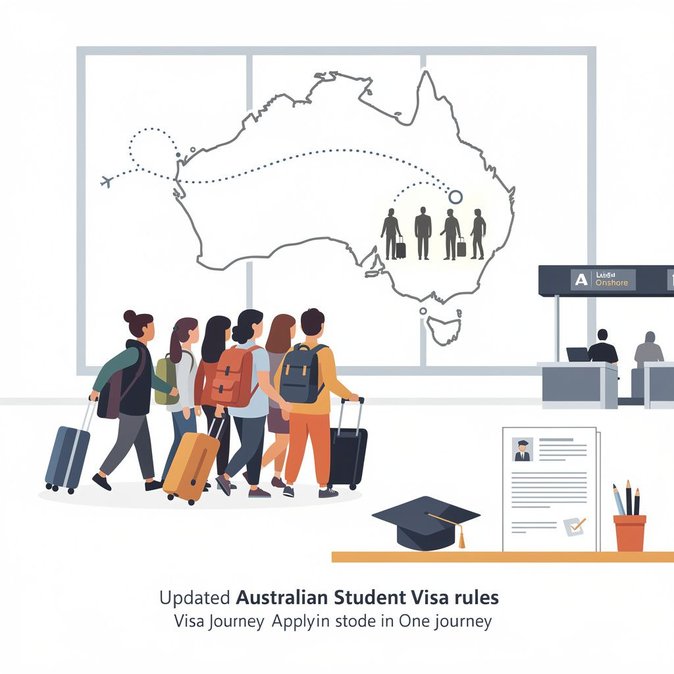
Although the rule has been in force since 2 October 2026, Home Affairs this week re-issued industry guidance – and migration agents have echoed the alert – emphasising that the vast majority of holders of a Student (subclass 500) visa who wish to undertake further study must now depart Australia to apply for a new student visa. Only four cohorts may still lodge onshore: doctoral candidates, students affected by provider default, those legitimately completing the same course with the *same* provider, and students progressing to a single higher-level course. Family members face similar restrictions: they must be included in the combined offshore application, and subsequent-entrant pathways are all but closed. The tightening is part of a broader clamp-down on so-called “visa hopping”, intended to curb prolonged stays by serial course transfers. For education providers the offshore-lodgement requirement has immediate commercial ramifications. Bridging-visa revenue and on-campus enrolment extensions are likely to fall, while marketing teams must pivot to securing a student’s full study pathway upfront. Agents advising current students should map course completion dates against outbound-travel options well in advance, as peak holiday periods may constrain flights at short notice. Universities hosting large cohorts of South-Asian and Latin-American students – groups historically prone to course switching – may see a dip in enrolments for packaged add-on courses. Conversely, regional institutions that offer doctoral programs could capitalise on their exemption to attract high-value candidates who wish to remain onshore.
Source: Shoreline Migration