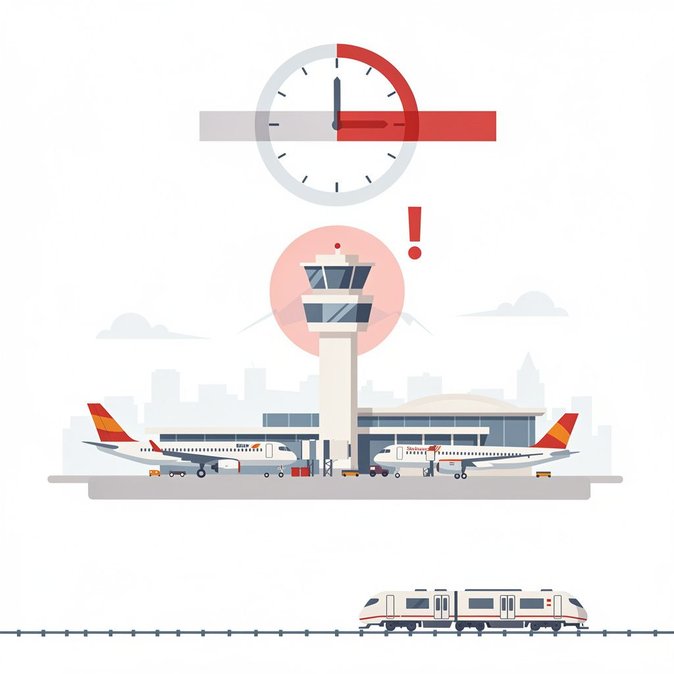
Cross-border air travel between Switzerland and northern Italy is facing disruption today as Milan Malpensa’s air-traffic-control staff stage a four-hour walkout (13:00–17:00 CET) called by the FAST-Confsal AV union. ENAV, Italy’s air-navigation provider, confirmed the action in a notice checked on the morning of 22 November. While the strike is local, its ripple effects extend to Geneva and Zurich, whose schedules depend heavily on Malpensa feeder flights and shared airspace sectors. Swiss International Air Lines pre-emptively cancelled its mid-afternoon LX 1618/1619 Zurich–Malpensa rotations, rebooking passengers onto evening services outside the strike window. EasyJet scrubbed three Geneva–MXP sectors and warned of knock-on delays on Geneva-Fiumicino services owing to crew and aircraft positioning. Geneva Airport’s operations dashboard showed a build-up of departure delays averaging 42 minutes shortly after 14:00. Under Italian law, flights in the guaranteed time-bands (07:00–10:00 and 18:00–21:00) must operate, and ENAC has published the protected-flight list. However, business travellers relying on same-day connections to long-haul departures from Malpensa have been advised to reroute via Zurich or take the Ceneri rail link to reach Lombardy by evening. Why it matters for Swiss corporates: Lombardy is Switzerland’s second-largest trading partner regionally, and Malpensa handles high-value pharma and watch-industry cargo trucked in from Ticino and Valais. Forwarders fear late-arrival surcharges if cut-off times for overnight freighters are missed. Human-resources teams moving staff under commuter permits (G-permits) should note that rail alternatives are running normally, but road travel may encounter extra customs queues at Chiasso as travellers switch modes. The strike ends at 17:00, yet recovery could stretch into the late evening as displaced aircraft and crews reposition. Travellers should monitor airline apps and keep hotel options open. A broader nationwide air-transport strike mooted for 4 December is still unconfirmed; mobility managers should watch ENAV updates and build slack into early-December itineraries.