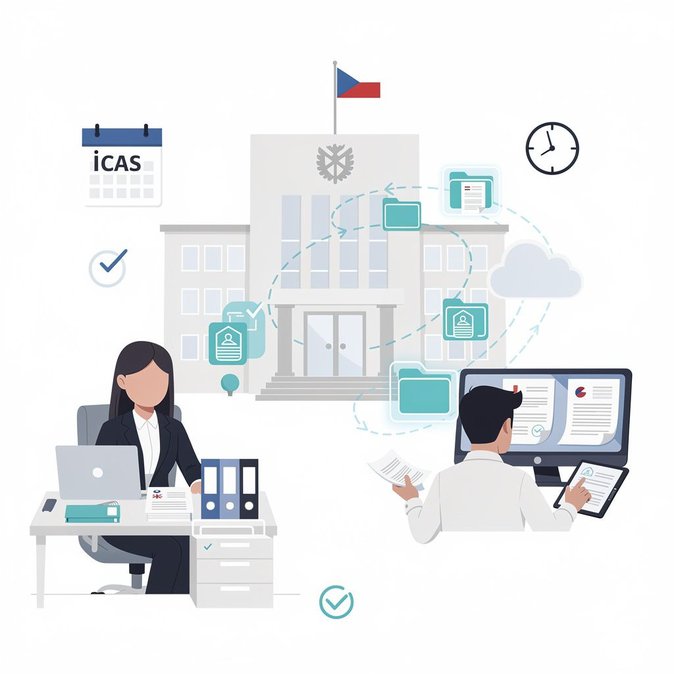
The Czech Ministry of the Interior confirms that Act No. /2026 Sb. on the Entry and Residence of Foreigners (the so-called “new Foreigners Act”) was printed in the Collection of Laws at 06:00 on 22 November 2026, completing the legislative process that began in March 2026. The act fully replaces the current Aliens Act 326/1999 Sb. and represents the largest overhaul of Czech immigration rules in more than two decades. The 380-section statute introduces end-to-end digital case-management through a new Integrated Immigration Agenda System (ICAS). From July 2027, all applications for visas, employee cards, blue cards, intra-corporate transferee permits, and permanent residence must be lodged online; applicants will be issued a secure “foreigners’ account” to track deadlines, upload documents, and receive decisions electronically. Physical filing will remain possible only in narrowly-defined humanitarian or digital-exclusion situations. For employers, the law broadens the government’s ability to impose annual and monthly quotas on certain nationalities and permit types. While high-skilled categories such as the EU Blue Card remain quota-exempt, lower-skilled employee cards and long-term business visas may be capped more aggressively. The Ministry of Industry and Trade is tasked with publishing quota tables each November for the following calendar year, giving HR teams six weeks to adjust recruitment plans. Security provisions have also been tightened. The police may now suspend processing if external intelligence indicates a security risk, and biometric re-enrolment will be required at each permit renewal. At the same time, the act streamlines family-reunification rules and shortens standard decision deadlines from 270 to 180 days. Although most provisions take effect on 1 July 2027, companies need to prepare immediately. Employers sponsoring third-country nationals should budget for new electronic signatures, adapt onboarding workflows to ICAS, and monitor forthcoming decrees that will set documentary formats and government fees. Multinationals with large Czech operations are advised to brief global mobility teams and update employee handbooks before year-end.