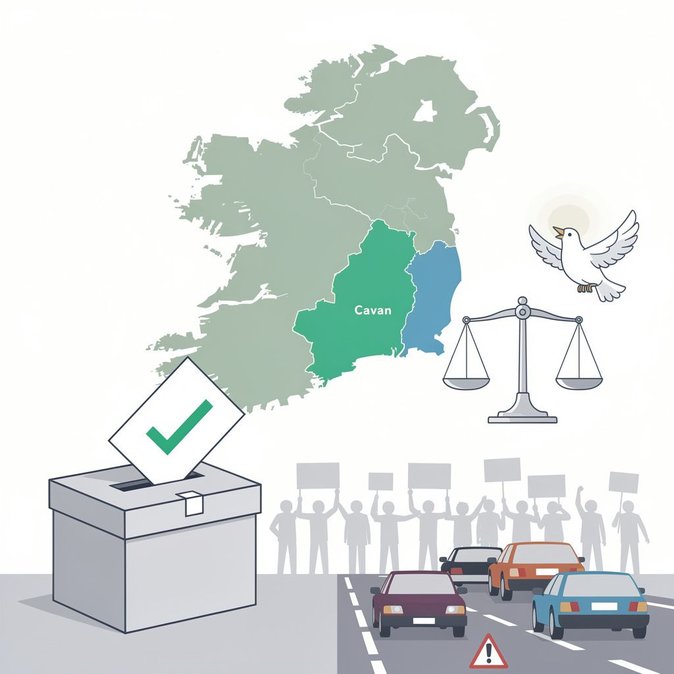
On Sunday, 22 November, Cavan County Council passed a Sinn Féin-sponsored motion calling for a nationwide referendum on Irish neutrality and the future of the ‘triple-lock’. Although a local authority resolution carries no legal force, it is politically significant: Cavan is the first county to take a formal stance since national protests erupted last month. Councillors warned that dismantling the triple-lock without a popular vote would breach assurances given during previous EU-treaty referendums. The debate mirrored national fault-lines, with Fine Gael and Fianna Fáil members arguing that the UN veto effectively gives Russia or China a say over Irish peacekeeping missions. From a mobility standpoint, the vote matters because local councils control parade permits and liaise with Garda divisions on crowd-management plans. A growing number of county-level neutrality motions could embolden campaigners to stage simultaneous demonstrations in regional towns—potentially impacting secondary airports such as Shannon and Ireland West, as well as arterial roads like the M3 and N55 that link Cavan to Dublin. Employers with distributed workforces in Ireland should therefore map upcoming council meetings and public consultations where neutrality is on the agenda. Experience shows that even small-scale rural protests can prompt short-notice traffic restrictions, affecting inter-site travel, supplier deliveries and employee commuting. Contingency communications—SMS alerts, flexible shift start times and remote-work options—are prudent risk-mitigation tools. The Cavan motion also adds pressure on the Government in advance of a crucial Dáil vote expected in December. Should the bill pass without a referendum pledge, civil-society groups have signalled their intention to escalate protest activity, including potential demonstrations at ports and ferry terminals. Global mobility teams should monitor local-authority agendas alongside national security briefings to gauge where and when travel bottlenecks may emerge.
Source: Anglo Celt