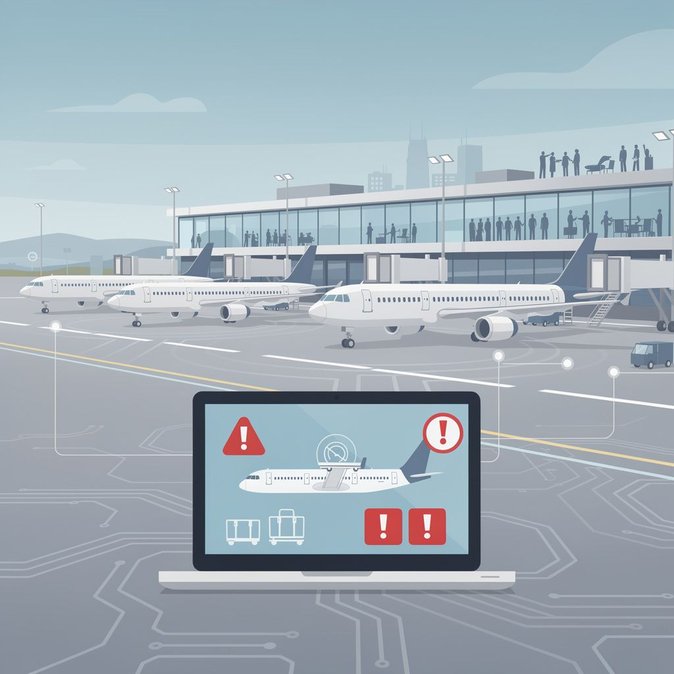
Holiday travel headaches escalated Sunday when a software glitch crippled Delta Air Lines’ weight-and-balance automation system, forcing dispatchers nationwide to revert to manual calculations. The Federal Aviation Administration issued a ground-delay program for Delta-operated flights, with Hartsfield-Jackson Atlanta International Airport—the carrier’s main hub—seeing delay percentages approach 40 percent, according to FlightAware. Delta said the failure was unrelated to last week’s government-wide router malfunction that led to a rare national ground stop, but travelers saw little difference as gate-agents printed paper load manifests and pilots waited for clearances. As of 1 p.m. EST, more than 48 percent of Delta’s global departures were delayed, snarling connections at Detroit, Minneapolis and New York-LaGuardia. The outage is a stark reminder of the fragility of airline and air-traffic IT infrastructure at a time when passenger volumes are nearing pre-pandemic records. Cybersecurity analysts warn that legacy systems patched onto modern cloud platforms create single points of failure that cascade quickly. Corporate travel managers are now revisiting service-level agreements that define when carriers must rebook employees on other airlines or cover hotel costs. Delta has issued a change-fee waiver for customers flying November 22-23 and promised automatic rebooking where possible. Mobility teams should alert assignees to monitor the Fly Delta app for seat assignments that may shift as aircraft swaps ripple through the network. Given lingering supply-chain constraints on spare parts and IT hardware, analysts say full schedule normalization could take up to 36 hours, which means Monday morning flights for road-warriors remain at risk.
Source: Associated Press