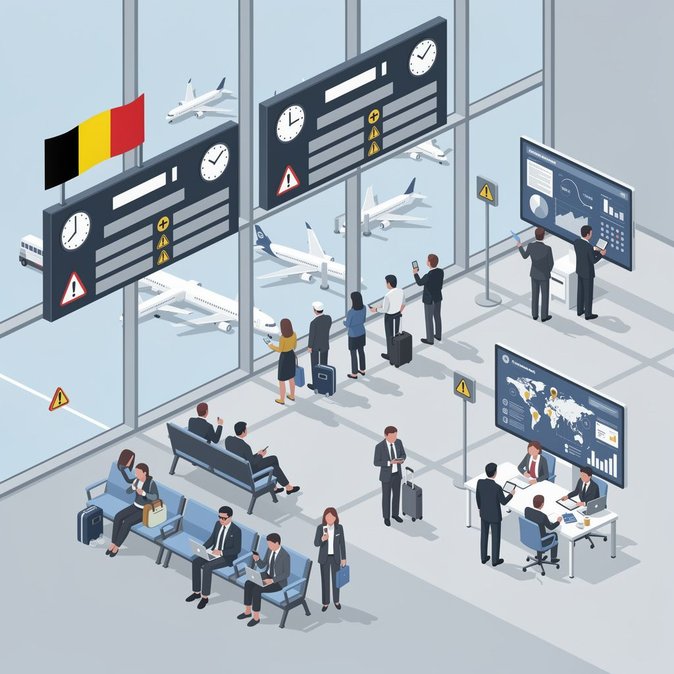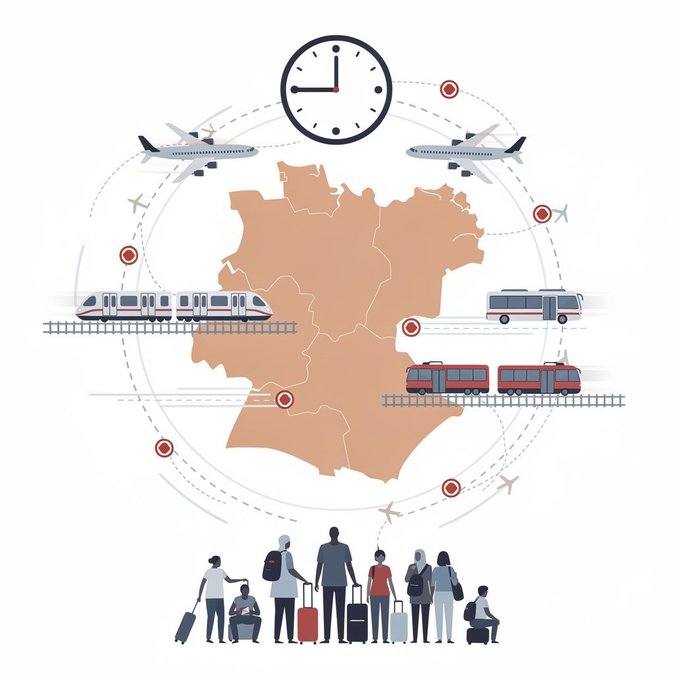
Belgium woke up to near-paralysis on Monday, 23 November 2026, as the country’s three largest trade-union confederations (ACV/CSC, ABVV/FGTB and ACLVB) staged an eleventh “day of action” against the federal government’s austerity programme. From 07:00 to 21:00 local time, air-navigation provider Skeyes withdrew service, forcing Brussels Airport and Brussels South-Charleroi Airport to cancel every scheduled passenger flight. Some long-haul aircraft that had taken off before the air-space closure diverted to Amsterdam, Frankfurt and Paris, while home carrier Brussels Airlines announced wholesale re-accommodation and refund options. The shutdown rippled far beyond the runways. Inside the capital, metro operator STIB could keep only lines 1 and 5 running, supplemented by a skeletal tram and bus network running at 10-30 minute headways. De Lijn in Flanders reported roughly 40 per cent of its services cancelled, and Wallonia’s TEC warned of similar gaps—especially around Liège-Verviers. Although national rail operator SNCB/NMBS maintained a normal timetable, trains to Brussels-North and Brussels-Midi were overcrowded as demonstrators poured in for a 35,000-strong march that closed key arteries and tunnels between 09:00 and 15:00. For corporate mobility managers the impact was immediate: thousands of travellers were stranded, day trips collapsed, and cargo flows through Brucargo stalled. Belgian‐based multinationals triggered work-from-home policies, while regional HQs for EU institutions shifted meetings online. Airlines estimate the direct cost of the 14-hour air-space closure at more than €15 million, not counting network knock-on effects that will stretch into mid-week as aircraft and crews reposition. Beyond the headlines, the dispute underscores an emerging risk in Belgium’s mobility landscape. Since sectoral negotiations stalled in August, unions have increasingly coordinated cross-modal walkouts—escalating the probability that a single strike notice can simultaneously immobilise aviation, urban transport and waste collection. Travel managers are therefore being advised to build extra buffer days into Belgian itineraries through Q1 2027 and to pre-contract coach operators for contingency shuttles between Brussels and secondary airports such as Lille, Eindhoven or Düsseldorf. Companies with posted workers should also review Belgian minimum-service legislation adopted earlier this year. Although the law obliges critical sectors to maintain “essential activities”, the aviation exception is narrow, covering only medical evacuations and state flights—meaning business aviation and scheduled cargo remain exposed. Legal teams may wish to track a draft royal decree, expected in December, that would expand the minimum-service list to include perishables and high-value pharma shipments, two pillars of Belgium’s export economy.