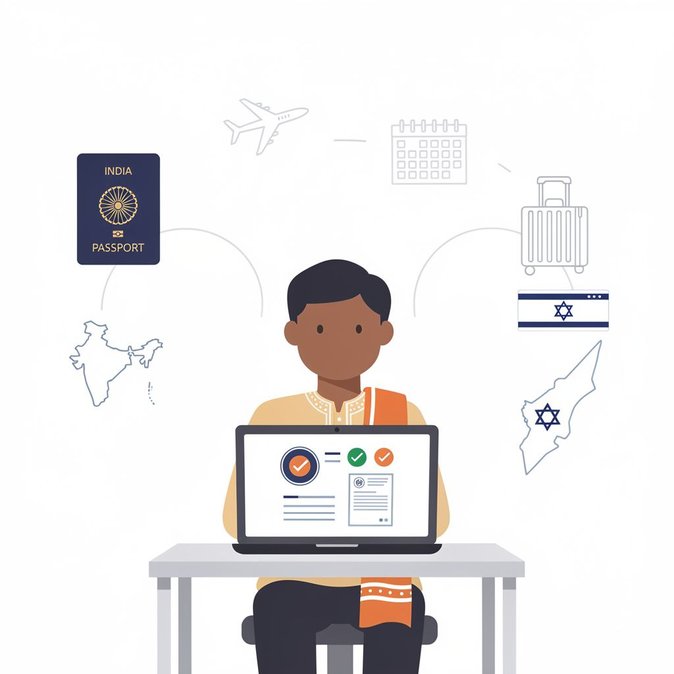
The Embassy of Israel in New Delhi has quietly switched Indian short-stay visa processing to a fully digital platform, rolling out the eVisa-B2 system nationwide on 25 November 2026. Indians planning tourism, family visits, business meetings, short medical stays or non-academic study can now file, pay and receive approval entirely online at israel-entry.piba.gov.il. The eVisa-B2 carries a non-refundable handling fee of 105 New Israeli Shekels (≈ ₹2,250). Approved visas are typically valid for up to 90 days and allow a stay of up to 90 days per trip, though the exact period is stamped by Border Police on arrival. Applicants upload a passport copy (valid beyond the trip), a recent white-background photograph, return air tickets, proof of accommodation or host invitation, health insurance and three months of bank statements. The portal warns that possession of an e-visa does not guarantee entry—officers may still question purpose and funds. Israel’s move aligns it with Gulf neighbours that already issue e-visas to one of India’s fastest-growing outbound markets; arrivals from India topped 80,000 last year and are forecast to cross the pre-pandemic record by 2027. Eliminating physical appointments is expected to cut typical lead times from two weeks to three working days, making Tel Aviv more competitive for last-minute business travel and conferences. Companies in the IT, agritech and defence sectors—areas of accelerating Indo-Israeli cooperation—should update travel policies and briefing notes. Travellers must print or save the approval PDF and carry mandatory health insurance, which remains strictly enforced at Ben Gurion Airport. Those whose itineraries change after approval must apply anew; amendments are not possible. The traditional sticker visa route at Israeli missions remains open for complex cases or when consular staff request an interview, but officials say most tourists and business visitors should now use the eVisa portal as first option. Agencies report that the system already accepts Mastercard, Visa and RuPay cards, a boon for applicants previously hampered by international payment glitches.
Source: The Trip Keeper