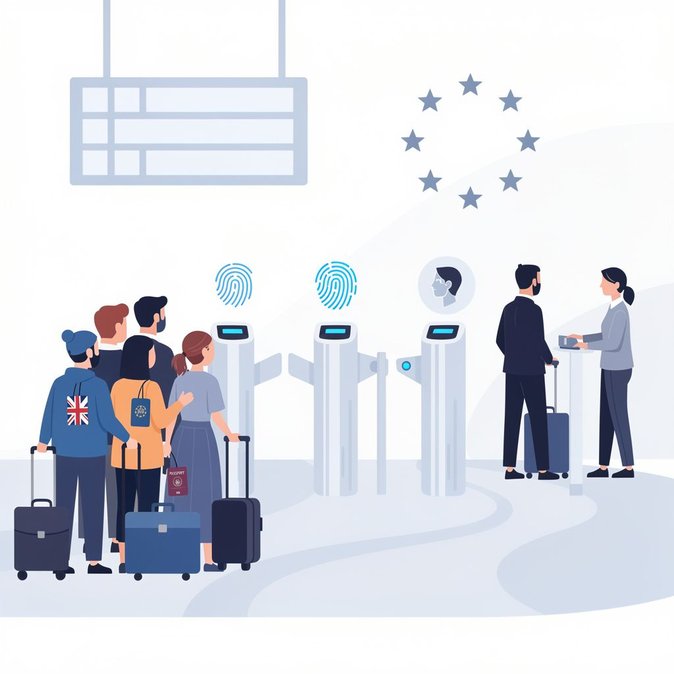
A coalition of more than 80 travel and hospitality bodies—the European Tourism Manifesto—has called on the European Commission to renew emergency powers allowing member-state border guards to pause biometric collection under the new Entry/Exit System (EES). In a press release issued in Brussels on 26 November, the group warned that persistent IT and staffing issues could cause hours-long queues when stricter enforcement begins in January 2027. The EES requires non-EU travellers, including British citizens, to provide fingerprints and a facial scan the first time they cross an external Schengen border. Trials at key airports this summer produced wait times of up to 90 minutes at peak periods despite the temporary suspension mechanism. Airlines for Europe (A4E), Airports Council International Europe (ACI Europe) and the World Travel & Tourism Council (WTTC) all back the plea for continued flexibility. UK travel managers are watching closely because 24 million outbound trips from Britain to the Schengen Area rely on smooth border processing. Corporate travellers on tight itineraries could face missed connections if every UK-EU flight funnels passengers through biometric kiosks. The Manifesto also calls for EU funding to accelerate staffing, an expanded communication campaign to raise passenger awareness, and an urgent stress-test of land-border infrastructure—especially at Channel ports where coach parties risk the longest delays. Failure to address the problems, it says, could deter high-spend inter-continental tourists and undermine Europe’s competitiveness. Although the UK is no longer in the EU, British carriers and airports support the recommendations. Heathrow has already installed additional e-gates in anticipation, but warns that congestion on the continental side could ripple back to UK departure halls. Mobility teams should brief travellers on potential delays from spring 2027 and consider alternative routings via Ireland, which remains outside EES.
Source: Travel Weekly UK