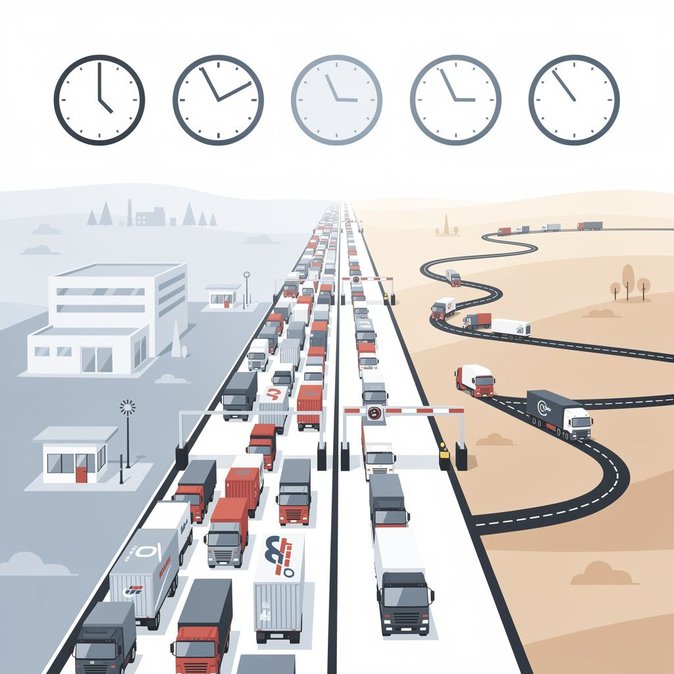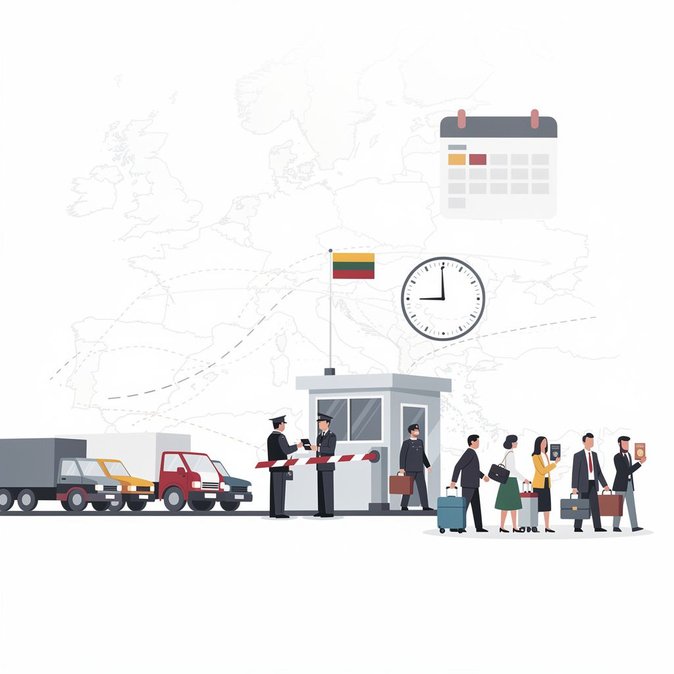
Poland has formally notified the European Commission that it will prolong the temporary re-introduction of border controls on its land frontiers with Germany and Lithuania for a further six months, moving the expiry date from 1 October 2026 to 30 March 2027. The decision, published on 25 November 2026, cites ‘continued threats to public order and internal security posed by persistent migratory pressure’ as the overriding justification. The measure means that anyone crossing by road or rail at more than 70 authorised checkpoints—including Świecko-Frankfurt (Oder), Olszyna-Forst and Budzisko—remains subject to systematic identity, visa and vehicle checks. Business travellers should plan for additional stop times of 10–25 minutes at major crossings and ensure they carry proof of accommodation, itinerary and health insurance even if they normally travel visa-free within the Schengen Area. Polish authorities say the controls have already prevented over 9,000 irregular entry attempts in 2026, mostly by nationals of Syria, Afghanistan and Somalia transiting through the Western Balkans route. Hauliers’ associations, however, report losses of up to €1.8 million per week because of slower freight movements to German automotive plants. Companies with “just-in-time” logistics chains are advising drivers to switch to lesser-used crossings such as Zgorzelec–Görlitz (rail) outside peak hours. For global mobility managers, the extension underscores the need to build extra buffer time into employee travel schedules and to update posted-worker notifications that reference ‘Schengen-wide’ freedom of movement. Employers posting non-EU talent from Polish entities into Germany should warn staff that re-entry into Poland may involve additional questioning about work status and social-security coverage. The Interior Ministry says it will review the necessity of controls every 30 days; a mid-term evaluation is expected in late January 2027. Looking ahead, Warsaw has signalled that the controls could become semi-permanent if the EU fails to agree a common asylum pact by spring 2027. Multinationals should therefore budget for higher travel-compliance costs when drafting 2027 mobility policies.
Source: 22-55 Newswire