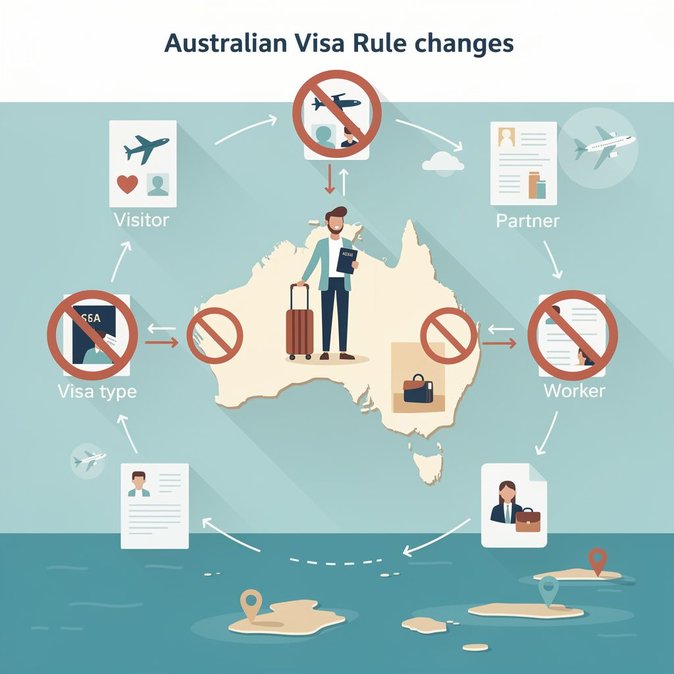
From today, every new Visitor visa granted by Australia will carry condition 8503 – the so-called “No Further Stay” rule – making it impossible for most tourists and short-term business visitors to lodge another substantive visa application while they remain in the country. The change flows from the Migration Amendment (Preventing Further Stay for Visitor Visas) Regulations 2026, a legislative instrument that commences on 28 November 2026 after being registered earlier this month. The same requirement now also applies to Electronic Travel Authority (subclass 601) and eVisitor (subclass 651) visas, closing a long-used pathway for “visa hopping” and on-shore status changes. Under condition 8503, holders must depart Australia before they can apply for any other visa except a protection visa or a very limited range of temporary visas specified in the regulations. Waivers remain possible, but only in compelling and compassionate circumstances and the Department of Home Affairs has already advised that waiver approvals will be rare. Existing Visitor visas issued before today are not automatically re-labelled, but new applications lodged from 28 November will attract the condition by default. For global mobility managers, the immediate implication is that business travellers who may need to transition onto a Temporary Skill Shortage (subclass 482) or other work visa must now plan to lodge their primary applications offshore. Organisations with transferees arriving on Visitor visas for project scoping or interviews should factor in at least one exit-and-return cycle, potentially adding cost and disrupting project timelines. The rule also limits the once-popular strategy of bringing dependent partners to Australia on a Visitor visa and then applying for a Partner visa on shore. Migration agents are warning that the “wave of automatic 8503s” will increase administrative load: clients will require clearer pre-travel instructions and, where a legitimate pathway exists, properly-timed offshore lodgements. Airlines and travel risk teams should expect a spike in short-notice trans-Tasman or Southeast-Asian exits as travellers seek to satisfy offshore lodgement rules. Meanwhile, the government argues the measure will restore integrity to the program and “place downward pressure on net overseas migration” by discouraging long-term stays that begin on a tourist visa. Corporates should review visitor-to-workforce conversion practices immediately, update intranet guidance, and brief hiring managers that ‘quick switch’ options have effectively been closed. Failure to do so could strand critical talent outside Australia or expose projects to lengthy delays while new visas are processed offshore.