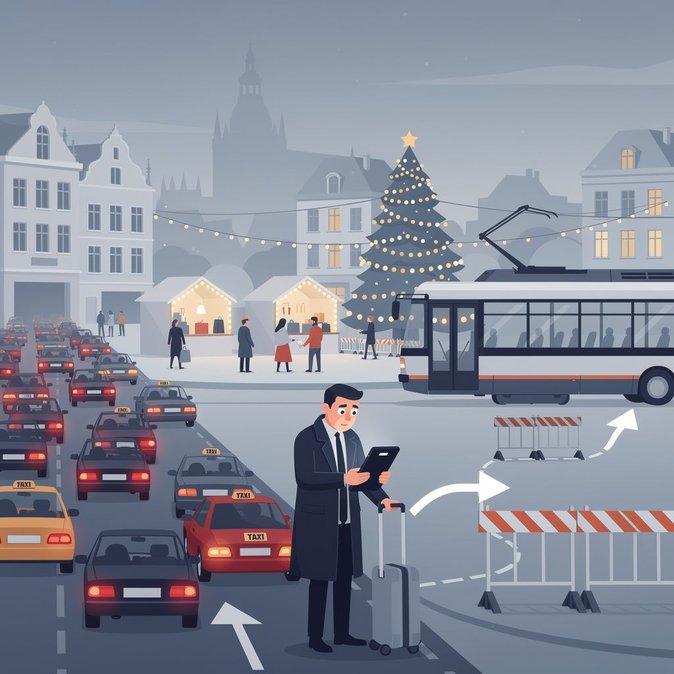
Brussels city authorities issued an extraordinary traffic bulletin on Friday, 27 November 2026, warning motorists and visitors of “severe congestion” as the capital’s Black Friday shopping frenzy coincided with the opening weekend of the Winter Wonders festival and several museum launches. Police deployed additional officers at major intersections around Rue Neuve, the Sablon district and Brussels-Central station after real-time sensors showed vehicle flows at 135 % of typical weekday peaks by 11 a.m. Public transport operator STIB activated its event protocol, adding extra metro frequency on lines 1 and 5 and rerouting tram 4 to avoid pedestrian spill-over near the Grand Place. For inbound business travellers the practical impact was felt immediately: taxis from Brussels Airport reported journey times of up to 90 minutes instead of the usual 25, while Thalys and Eurostar passengers faced queues for onward connections. Several multinational headquarters in the EU quarter advised staff to work remotely or stagger shifts. City officials recommended using park-and-ride facilities at Heysel and Delta and consulting the Winter Wonders journey planner. The bulletin underscores how seasonal events can paralyse last-mile mobility even when long-distance transport is functioning normally – a factor corporate travel policies increasingly factor into risk assessments. With Belgium still recovering from the 23 November national strike, Friday’s urban gridlock served as a reminder that mobility challenges extend beyond airspace, affecting road and urban rail networks that expatriates and short-term assignees rely on daily.
Source: The Brussels Times