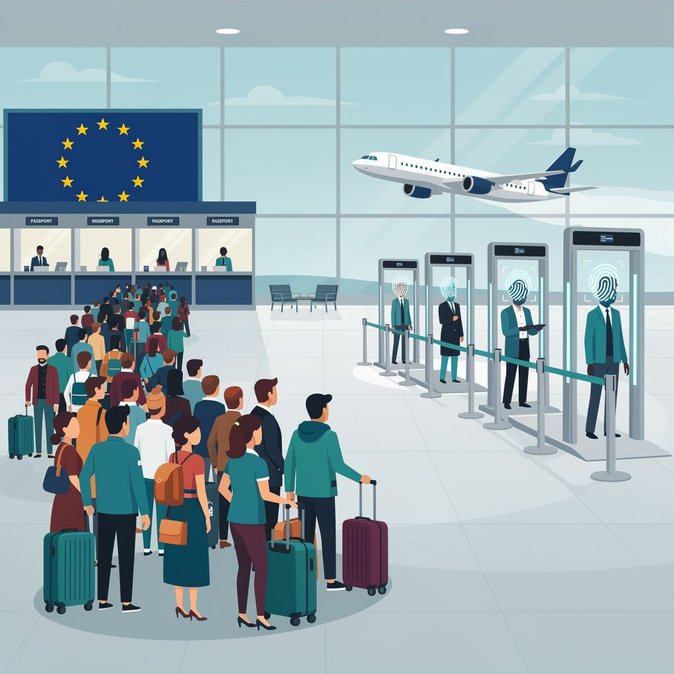
A coalition of more than 80 European tourism and travel bodies, known as the Tourism Manifesto, has called on the European Commission to let member states temporarily suspend mandatory biometric collection under the new Entry/Exit System (EES) during the busy winter season. The appeal, issued in Brussels on 27 November 2026, follows reports of queues exceeding five hours at airports such as Brussels Zaventem since the full roll-out of fingerprint and facial-scan checks for non-EU nationals in September. British and American business travellers – now treated as third-country nationals – have been among the hardest hit. A World Travel & Tourism Council survey cited by the alliance found that 39 % of UK respondents would avoid Schengen destinations if long waits became routine, placing an estimated €45 billion in visitor spending at risk. Airports Council International Europe and Airlines for Europe have echoed the call, warning that chronic congestion undermines slot planning and punctuality across inter-line connections. At Brussels Airport, management has already ordered eight extra staffed booths for December and six new e-gates for early 2027, but concedes that infrastructure alone cannot fix a system still prone to software faults and staffing shortages. Under a grace period that lapsed in September, Belgian border police were able to suspend biometric capture when lines became excessive; since then they must apply the checks unless the Commission grants a new derogation. For mobility teams the message is clear: incoming assignees on non-EU passports should build at least two additional hours into connection windows, complete any available pre-registration, and carry printed evidence of onward bookings in case of missed flights. Employers may also face knock-on costs as transferees breach apartment check-in times or fail to attend day-one orientation because of border delays. The Commission has yet to respond, but industry insiders expect a decision before the Christmas peak. If Brussels declines, pressure could grow for unilateral action by frontline states, raising questions about Schengen uniformity and the legal validity of mixed enforcement. Either way, the episode shows that biometric modernisation, without operational resilience, can easily backfire on Europe’s competitiveness for business travel.
Source: Travelling for Business