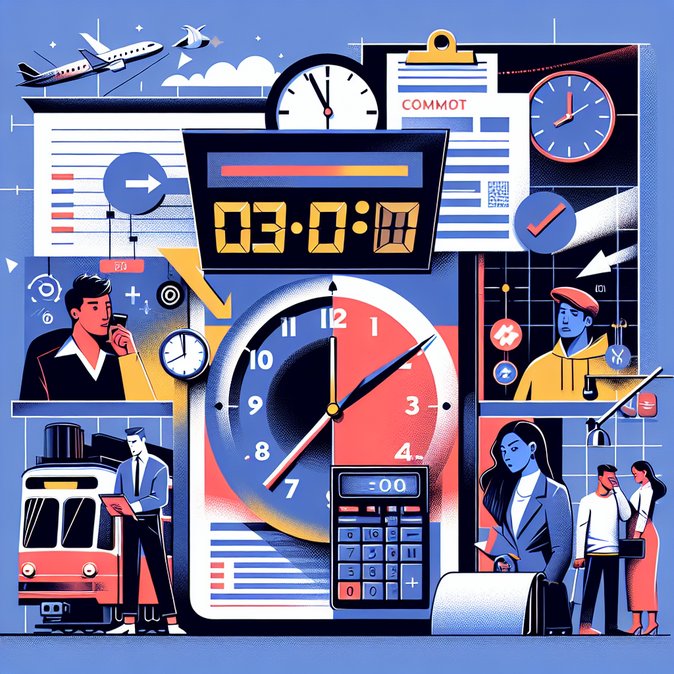
At 03:00 on Sunday, 26 October, Germany moved from Central European Summer Time (CEST) back to Central European Time (CET), giving residents an extra hour’s sleep but creating a raft of operational headaches for mobility professionals. Nationwide media coverage—*Hessische/Niedersächsische Allgemeine* reported at 18:56 that 70 % of Germans want the clock-change abolished—highlights persistent public frustration with the bi-annual shift.
From a mobility standpoint the one-hour rollback affects everything from airline slot coordination to overtime calculations for night-shift assignees. Deutsche Bahn confirmed that roughly 120,000 onboard clocks were reset automatically, but some long-distance trains had to wait an hour at intermediate stations to stay on schedule. Local transit operator Mainzer Mobilität published amended night-bus times and warned of potential data errors in journey-planner apps.
HR departments must also adjust digital time-and-attendance systems. Under German Working-Time law, employees on duty during the 02:00–03:00 window accrue an extra paid hour, potentially triggering overtime premiums. Payroll teams should verify that SAP or Workday settings account for the duplicated hour, particularly for posted workers on A1 certificates whose social-security reporting is time-stamped.
The EU’s 2019 plan to scrap seasonal time changes remains stalled in the Council, so businesses should plan for the next switch—forward to CEST—on 29 March 2026. Travel managers are advised to double-check Monday-morning flight and rail departure times, as some ticketing systems display local time while others default to UTC.
From a mobility standpoint the one-hour rollback affects everything from airline slot coordination to overtime calculations for night-shift assignees. Deutsche Bahn confirmed that roughly 120,000 onboard clocks were reset automatically, but some long-distance trains had to wait an hour at intermediate stations to stay on schedule. Local transit operator Mainzer Mobilität published amended night-bus times and warned of potential data errors in journey-planner apps.
HR departments must also adjust digital time-and-attendance systems. Under German Working-Time law, employees on duty during the 02:00–03:00 window accrue an extra paid hour, potentially triggering overtime premiums. Payroll teams should verify that SAP or Workday settings account for the duplicated hour, particularly for posted workers on A1 certificates whose social-security reporting is time-stamped.
The EU’s 2019 plan to scrap seasonal time changes remains stalled in the Council, so businesses should plan for the next switch—forward to CEST—on 29 March 2026. Travel managers are advised to double-check Monday-morning flight and rail departure times, as some ticketing systems display local time while others default to UTC.
VisaHQ가 도와드릴 수 있는 방법
VisaHQ는 개인과 기업의 비자 신청 절차를 간소화합니다. 최신 여행 요건을 확인하고 필요한 서류를 준비한 뒤 독일 VisaHQ 포털에서 온라인으로 신청을 관리하세요.더 많은 정보 독일
모두 보기
SPD and Greens call for redeploying 4,000 border-police officers from internal borders to railway stations

Germany’s family-reunification freeze: 1,500 hardship visa requests, zero approvals after three months