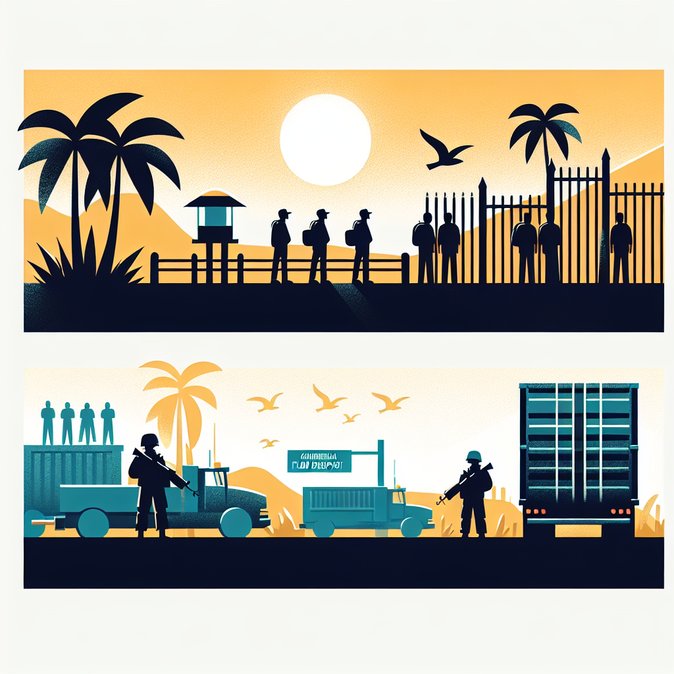
Interior Secretary Kristi Noem on December 11 transferred a 60-mile swath of public land along California’s frontier with Mexico to the Department of the Navy, effectively turning it into a military security zone. More than 7,000 active-duty troops already stationed across the Southwest may now apprehend migrants and enforce new federal trespass penalties on the military-controlled property.
The designation extends a controversial strategy first piloted in Arizona and Texas earlier this year. While Border Patrol apprehensions have plummeted to 1960s levels—largely due to stringent asylum limitations—the administration argues that military deterrence remains necessary. Civil-rights groups say the move skirts the Posse Comitatus Act, which bars the armed forces from domestic law-enforcement roles.
![California Border Strip Declared Military Zone, Granting Troops Arrest Powers]()
For cross-border trade, the change raises operational questions for maquiladora shippers that rely on Imperial Valley crossings. Logistics firms fear cargo inspections could slow if military checkpoints proliferate along roadways that traverse the new zone. Mobility professionals overseeing employee commutes between San Diego and Mexicali are advising staff to carry additional ID and proof of work authorization.
Legal scholars expect swift court challenges; a federal judge the same day blocked Trump’s separate deployment of California National Guard troops to Los Angeles, underscoring judicial skepticism toward military involvement in civil immigration matters. Until litigation plays out, employers should monitor crossing times and review duty-of-care protocols for transborder staff.
The designation extends a controversial strategy first piloted in Arizona and Texas earlier this year. While Border Patrol apprehensions have plummeted to 1960s levels—largely due to stringent asylum limitations—the administration argues that military deterrence remains necessary. Civil-rights groups say the move skirts the Posse Comitatus Act, which bars the armed forces from domestic law-enforcement roles.

For cross-border trade, the change raises operational questions for maquiladora shippers that rely on Imperial Valley crossings. Logistics firms fear cargo inspections could slow if military checkpoints proliferate along roadways that traverse the new zone. Mobility professionals overseeing employee commutes between San Diego and Mexicali are advising staff to carry additional ID and proof of work authorization.
Legal scholars expect swift court challenges; a federal judge the same day blocked Trump’s separate deployment of California National Guard troops to Los Angeles, underscoring judicial skepticism toward military involvement in civil immigration matters. Until litigation plays out, employers should monitor crossing times and review duty-of-care protocols for transborder staff.
Source: Associated Press