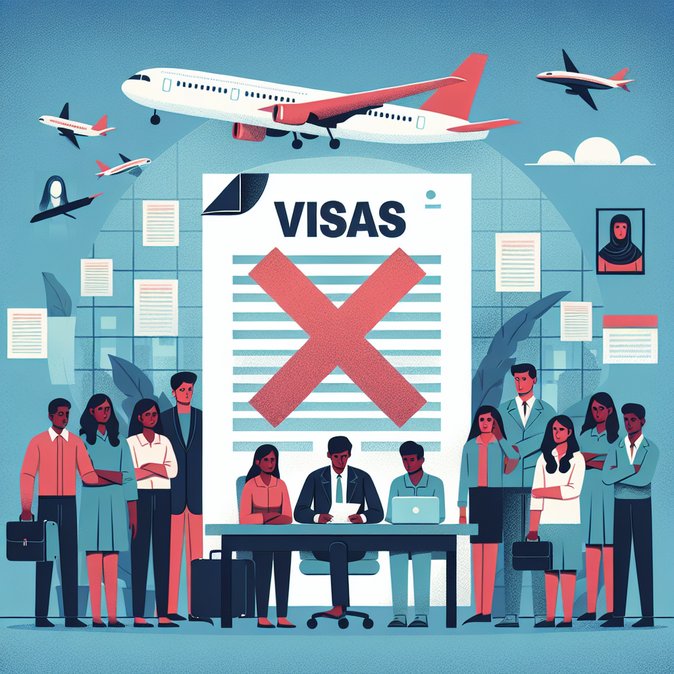
Trans-Atlantic relations took another knock on 24 December when Washington announced visa bans on five high-profile European officials, including former EU Internal-Market Commissioner Thierry Breton. Berlin joined Paris and Brussels in labelling the move “unjustified political retaliation.” A spokesperson for Germany’s Federal Foreign Office said the bans “undermine decades-old visa-waiver understandings” and warned of “proportionate counter-measures” if the restrictions are not lifted.
Background: The officials targeted helped draft the EU’s landmark Digital Services Act, which forces large online platforms—many of them U.S.-based—to police illegal content and disclose their algorithms. The Trump Administration argues the DSA amounts to censorship and hurts U.S. commercial interests; European capitals counter that the law is a legitimate safety measure. Although U.S. visa policy is a sovereign matter, Brussels normally enjoys near-automatic clearance under the Visa Waiver Program. Germany sees the unprecedented step as setting a worrying precedent that politicises mobility.
![Berlin Condemns New U.S. Visa Bans on EU Officials]()
Practical implications: The bans are largely symbolic—few of the named officials travel frequently to the United States—but German corporates fear broader collateral damage. In-house mobility managers at two DAX companies told Global Mobility News that they are bracing for “longer secondary screening” at U.S. entry points for employees involved in EU tech-regulation projects. Some advisers recommend documenting project scopes to show no regulatory conflict of interest.
What’s next: Berlin is coordinating an EU-wide response that could include reciprocal entry restrictions for certain U.S. lobbyists. A senior Bundestag source said lawmakers are already reviewing the legal basis for suspending privileged airport-lane access (the APEC-style EU–US ‘Fast Track’) for visiting U.S. officials. For global-mobility teams the message is clear: keep senior staff travel profiles low-key until the dust settles, and update crisis-management protocols for possible tit-for-tat measures.
Background: The officials targeted helped draft the EU’s landmark Digital Services Act, which forces large online platforms—many of them U.S.-based—to police illegal content and disclose their algorithms. The Trump Administration argues the DSA amounts to censorship and hurts U.S. commercial interests; European capitals counter that the law is a legitimate safety measure. Although U.S. visa policy is a sovereign matter, Brussels normally enjoys near-automatic clearance under the Visa Waiver Program. Germany sees the unprecedented step as setting a worrying precedent that politicises mobility.

Practical implications: The bans are largely symbolic—few of the named officials travel frequently to the United States—but German corporates fear broader collateral damage. In-house mobility managers at two DAX companies told Global Mobility News that they are bracing for “longer secondary screening” at U.S. entry points for employees involved in EU tech-regulation projects. Some advisers recommend documenting project scopes to show no regulatory conflict of interest.
What’s next: Berlin is coordinating an EU-wide response that could include reciprocal entry restrictions for certain U.S. lobbyists. A senior Bundestag source said lawmakers are already reviewing the legal basis for suspending privileged airport-lane access (the APEC-style EU–US ‘Fast Track’) for visiting U.S. officials. For global-mobility teams the message is clear: keep senior staff travel profiles low-key until the dust settles, and update crisis-management protocols for possible tit-for-tat measures.
Source: Reuters