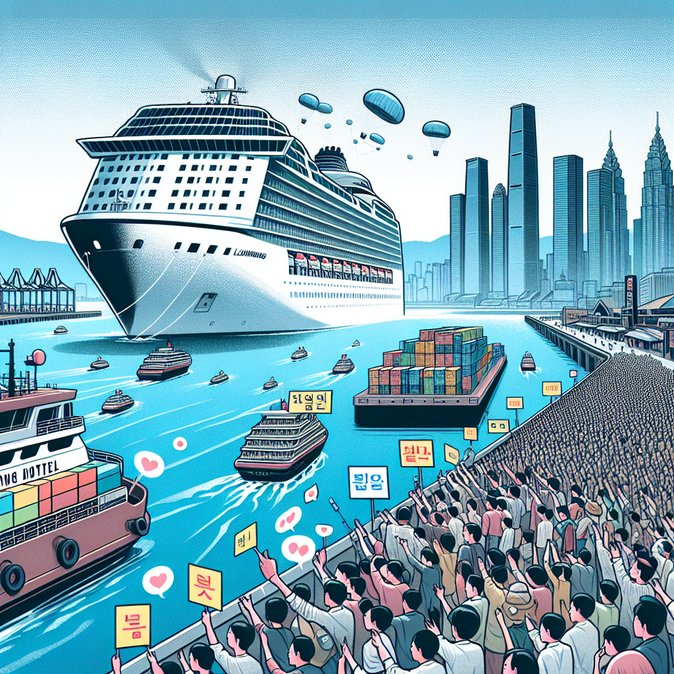
China’s visa-free cruise policy chalked up a new milestone on 29 December when 255 South Korean tourists disembarked at Lianyungang in Jiangsu province— the largest single Korean group the port has handled since Beijing granted 15-day visa-free entry to ROK nationals in June. Arriving aboard the Harmony Yungang, the travellers will spend five days touring Huaguoshan (the fabled ‘Monkey King’ mountain), the coastal boardwalk and nearby shopping zones before re-embarking for Busan.
Port officials said the group cleared immigration and customs in under 45 minutes thanks to dedicated e-channel kiosks and pre-filed passenger manifests submitted by the Korean tour operator. Local authorities laid on bilingual volunteers and duty-free pop-ups to capture inbound spending estimated at ¥2.3 million (US$320,000).
![South Korean cruise group makes record visa-free landing at Lianyungang port]()
For Jiangsu’s regional government, the arrival is proof that secondary ports can capitalise on China’s nationwide cruise-visa waiver, which lets organised groups enter at any of 13 seaports for up to 15 days and travel onwards to Beijing, Shanghai or inland cultural sites. Industry analysts say success at Lianyungang will encourage cruise lines to add “Northeast Asia loop” itineraries that combine Japan, Korea and North-China calls, reducing congestion at Shanghai’s Wusongkou terminal.
Corporate mobility managers with assignees in coastal cities should note that cruise passengers count towards inbound-tourism quotas used by local governments to allocate hotel and coach resources during peak periods. Companies booking off-sites or customer events around the Lunar New Year (late January) may face tighter room blocks and higher rates.
The Korean visitors praised the streamlined process, although some reported Wi-Fi activation issues with China’s real-name SIM-registration rules—a reminder that even visa-free passengers must comply with domestic ID verification requirements. Tour guides are advising visitors to download payment super-apps that now accept overseas credit cards to avoid cash hassles.
Port officials said the group cleared immigration and customs in under 45 minutes thanks to dedicated e-channel kiosks and pre-filed passenger manifests submitted by the Korean tour operator. Local authorities laid on bilingual volunteers and duty-free pop-ups to capture inbound spending estimated at ¥2.3 million (US$320,000).
For Jiangsu’s regional government, the arrival is proof that secondary ports can capitalise on China’s nationwide cruise-visa waiver, which lets organised groups enter at any of 13 seaports for up to 15 days and travel onwards to Beijing, Shanghai or inland cultural sites. Industry analysts say success at Lianyungang will encourage cruise lines to add “Northeast Asia loop” itineraries that combine Japan, Korea and North-China calls, reducing congestion at Shanghai’s Wusongkou terminal.
Corporate mobility managers with assignees in coastal cities should note that cruise passengers count towards inbound-tourism quotas used by local governments to allocate hotel and coach resources during peak periods. Companies booking off-sites or customer events around the Lunar New Year (late January) may face tighter room blocks and higher rates.
The Korean visitors praised the streamlined process, although some reported Wi-Fi activation issues with China’s real-name SIM-registration rules—a reminder that even visa-free passengers must comply with domestic ID verification requirements. Tour guides are advising visitors to download payment super-apps that now accept overseas credit cards to avoid cash hassles.
Source: Xinhua via People’s Daily Online