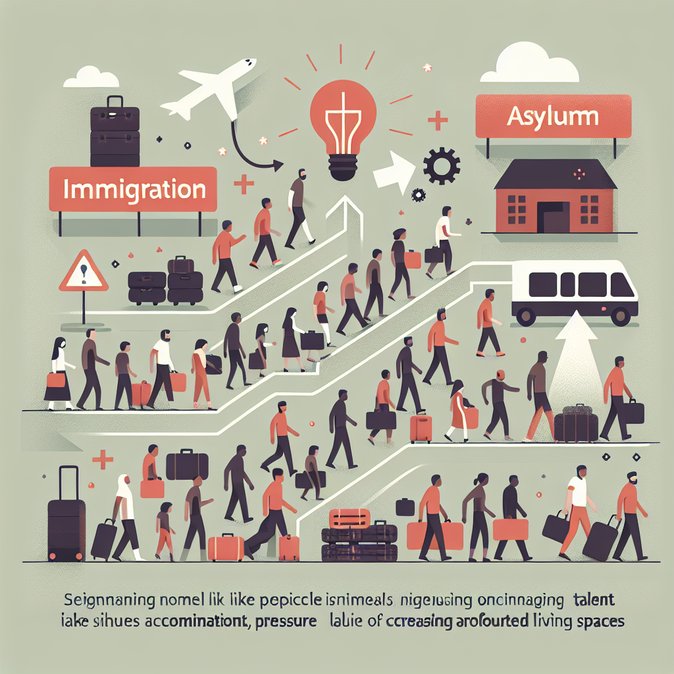
Ireland’s global-mobility landscape is shifting in two directions at once, according to the European Migration Network (EMN) annual review released on 29 December. Overall inward migration fell 16 % in the year to April 2025—down to 125,300 arrivals—largely because the wave of Ukrainian Temporary Protection beneficiaries has slowed to a trickle. Yet applications for International Protection (asylum) surged 40 % in 2024 to an all-time high of 18,561, with Nigeria, Jordan and Pakistan displacing Ukraine in the top three source countries.
For employers, the headline numbers mask important nuances. Work-permit issuance dipped 10 % in 2024, reflecting a tighter labour market and pending salary-threshold hikes due in March 2026. At the same time, more than 17,000 asylum applicants have obtained Labour-Market-Access Permission, increasing competition for entry-level roles in hospitality and logistics. HR teams relying on Critical Skills and General Employment Permits should therefore audit upcoming renewals to ensure salaries meet the new €36,605/€40,904 benchmarks.
![CSO Report: Immigration to Ireland Falls 16 % as 2024 Asylum Claims Hit Record High]()
Politically, the data add fuel to a contentious debate over accommodation shortages and border controls. The Department of Justice points out that asylum filings have already fallen 40 % in 2025, crediting faster triage at the International Protection Office and bilateral ‘safe-country’ returns agreements. Business lobbies, however, warn that unpredictable processing times and periodic hotel takeovers for refugee housing create a perception risk that could deter foreign investors.
On the compliance front, mobility managers must prepare for stricter policing of over-stays in 2026: the forthcoming International Protection (Amendment) Bill will align refugees’ citizenship-qualification period with other residents (five years) and introduce a ‘self-sufficiency’ test that bars applicants who relied on certain welfare benefits in the previous 24 months.
Practically, companies should refresh global-mobility policies to clarify support—if any—for dependent-family asylum claims, stay alert for new student-visa quotas being debated for English-language schools, and revisit housing allowances for inbound assignees given continued pressure on rental supply.
For employers, the headline numbers mask important nuances. Work-permit issuance dipped 10 % in 2024, reflecting a tighter labour market and pending salary-threshold hikes due in March 2026. At the same time, more than 17,000 asylum applicants have obtained Labour-Market-Access Permission, increasing competition for entry-level roles in hospitality and logistics. HR teams relying on Critical Skills and General Employment Permits should therefore audit upcoming renewals to ensure salaries meet the new €36,605/€40,904 benchmarks.

Politically, the data add fuel to a contentious debate over accommodation shortages and border controls. The Department of Justice points out that asylum filings have already fallen 40 % in 2025, crediting faster triage at the International Protection Office and bilateral ‘safe-country’ returns agreements. Business lobbies, however, warn that unpredictable processing times and periodic hotel takeovers for refugee housing create a perception risk that could deter foreign investors.
On the compliance front, mobility managers must prepare for stricter policing of over-stays in 2026: the forthcoming International Protection (Amendment) Bill will align refugees’ citizenship-qualification period with other residents (five years) and introduce a ‘self-sufficiency’ test that bars applicants who relied on certain welfare benefits in the previous 24 months.
Practically, companies should refresh global-mobility policies to clarify support—if any—for dependent-family asylum claims, stay alert for new student-visa quotas being debated for English-language schools, and revisit housing allowances for inbound assignees given continued pressure on rental supply.
Source: TheLiberal.ie