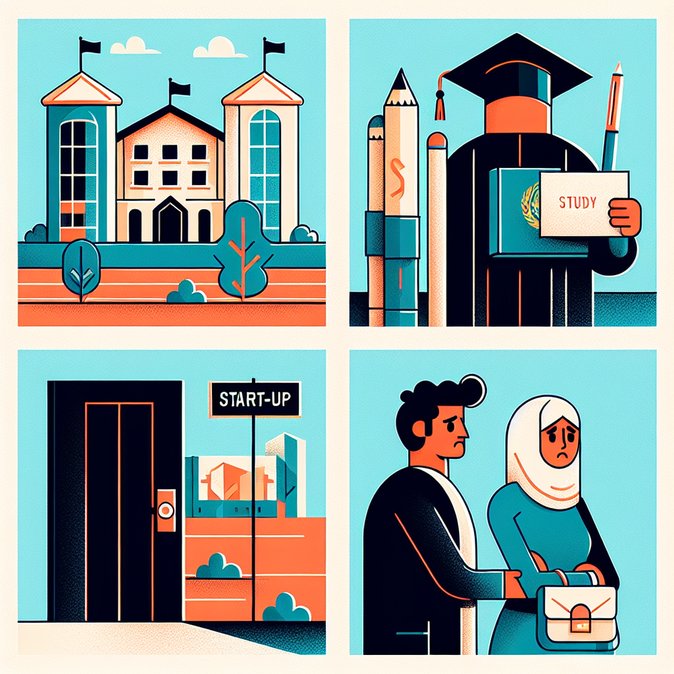
Immigration, Refugees and Citizenship Canada (IRCC) ushered in the new year with a suite of rule changes that will reshape Canada’s talent landscape in 2026. Chief among them is the removal of the Provincial/Territorial Attestation Letter (PAL/TAL) requirement for master’s and PhD students at public designated-learning institutions. Graduate-level applicants are now exempt from the national study-permit cap and qualify for two-week priority processing—a move designed to keep Canada competitive against the United States and Australia for high-end research talent.
Entrepreneurs face a very different reality: the federal Start-Up Visa (SUV) programme stopped accepting new applications at 23:59 EST on 31 December 2025. The only exception is for founders who already hold a 2025 commitment certificate, who have until 30 June 2026 to file. IRCC says an inventory exceeding ten years of processing capacity forced the pause, and promises a more “targeted” entrepreneur pilot later this year.
![Five Major Immigration Changes Kick In on 1 January 2026]()
Provincial governments also grabbed the spotlight. Ontario’s new “As-of-Right” credential framework allows regulated professionals certified elsewhere in Canada to start work in the province within ten business days—good news for employers scrambling for engineers and health-care workers. At the same time Ontario banned employers from demanding “Canadian work experience” in job postings, a requirement widely criticised as discriminatory against newcomers.
Alberta tightened its Rural Renewal Stream, adding valid-work-permit rules, capping community endorsements and limiting endorsement-letter validity to 12 months. The tougher criteria reflect concerns that some applicants were gaming the system by securing endorsements without genuine intent to settle.
Collectively, the measures point to a 2026 immigration agenda that rewards advanced skill sets and intra-Canadian mobility while putting the brakes on programmes showing large backlogs or questionable labour-market value.
Entrepreneurs face a very different reality: the federal Start-Up Visa (SUV) programme stopped accepting new applications at 23:59 EST on 31 December 2025. The only exception is for founders who already hold a 2025 commitment certificate, who have until 30 June 2026 to file. IRCC says an inventory exceeding ten years of processing capacity forced the pause, and promises a more “targeted” entrepreneur pilot later this year.

Provincial governments also grabbed the spotlight. Ontario’s new “As-of-Right” credential framework allows regulated professionals certified elsewhere in Canada to start work in the province within ten business days—good news for employers scrambling for engineers and health-care workers. At the same time Ontario banned employers from demanding “Canadian work experience” in job postings, a requirement widely criticised as discriminatory against newcomers.
Alberta tightened its Rural Renewal Stream, adding valid-work-permit rules, capping community endorsements and limiting endorsement-letter validity to 12 months. The tougher criteria reflect concerns that some applicants were gaming the system by securing endorsements without genuine intent to settle.
Collectively, the measures point to a 2026 immigration agenda that rewards advanced skill sets and intra-Canadian mobility while putting the brakes on programmes showing large backlogs or questionable labour-market value.
Source: CIC News