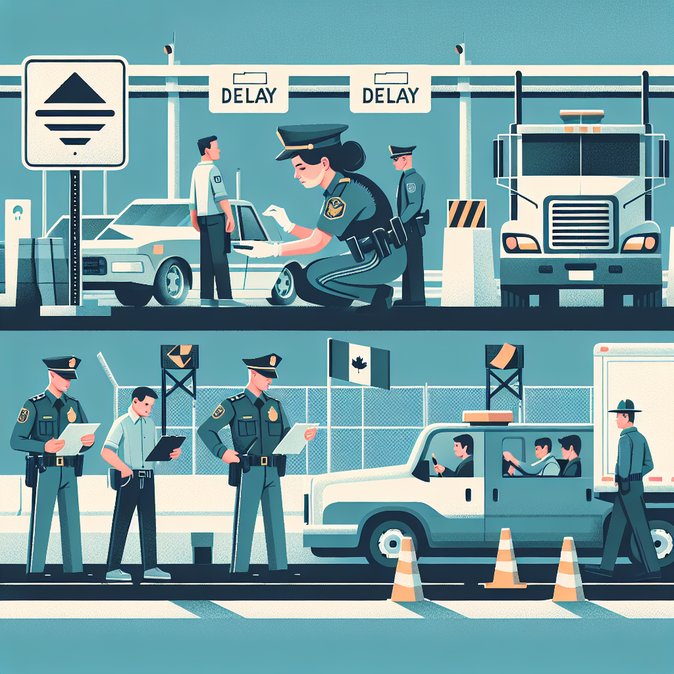
Germany’s temporary internal Schengen checks along the Polish frontier continue to net irregular entries. The Bundespolizei-inspektion Ludwigsdorf reported on the morning of 23 January that officers turned back 14 passengers at the A4 motorway checkpoint, Görlitz railway station and the city footbridge.
Ten Ukrainian nationals, two Russians, one Somali and one Moroccan were found without valid visas or residence permits. All were issued refusal-of-entry notices and returned to Poland under the bilateral readmission procedure. Criminal investigations for ‘unerlaubte Einreise’ under § 95 AufenthG were initiated. Mobile phone forensics indicated that several of the Ukrainians had paid smuggling fees via Telegram.
![Border police in Görlitz block entry of 14 travellers lacking Schengen rights]()
The incident underscores Berlin’s tougher stance on secondary movements after Poland relaxed its own frontier controls last autumn. From a corporate-mobility perspective, employees transiting by road from Warsaw to German sites should expect longer queues and document checks, even though Schengen formally guarantees free movement.
Companies operating shuttle services between Wrocław and Dresden are advised to brief drivers on required passenger documentation and build extra time into schedules. Travellers with pending residence-permit extensions should carry Fiktionsbescheinigungen in hard copy, as border tablets cannot always verify the QR-codes issued by local foreigners’ offices.
The Interior Ministry says the renewed checks will remain until at least March, citing continued pressure from irregular migration routes through Belarus and Poland.
Ten Ukrainian nationals, two Russians, one Somali and one Moroccan were found without valid visas or residence permits. All were issued refusal-of-entry notices and returned to Poland under the bilateral readmission procedure. Criminal investigations for ‘unerlaubte Einreise’ under § 95 AufenthG were initiated. Mobile phone forensics indicated that several of the Ukrainians had paid smuggling fees via Telegram.
The incident underscores Berlin’s tougher stance on secondary movements after Poland relaxed its own frontier controls last autumn. From a corporate-mobility perspective, employees transiting by road from Warsaw to German sites should expect longer queues and document checks, even though Schengen formally guarantees free movement.
Companies operating shuttle services between Wrocław and Dresden are advised to brief drivers on required passenger documentation and build extra time into schedules. Travellers with pending residence-permit extensions should carry Fiktionsbescheinigungen in hard copy, as border tablets cannot always verify the QR-codes issued by local foreigners’ offices.
The Interior Ministry says the renewed checks will remain until at least March, citing continued pressure from irregular migration routes through Belarus and Poland.