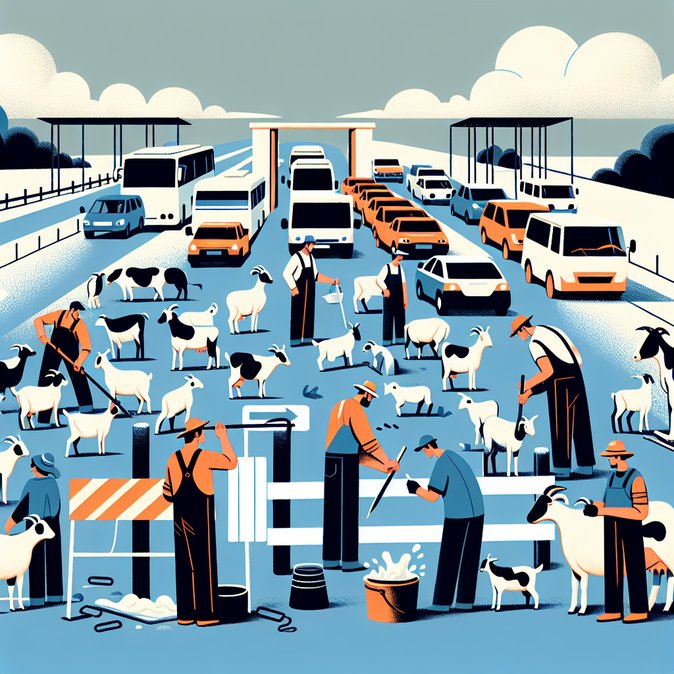
Fearing that FMD will jump from coastal Livadia into their high-value dairy zone, farmers in Aradippou mobilised heavy equipment on 22 February to erect seven roadside wheel-bath stations and block non-essential road access. Mayor Christodoulos Partou said the municipality acted “because every hour counts,” accusing the state of moving too slowly. The Agriculture Ministry insists the measures were taken under its guidance and has agreed to reimburse the cost of the tanks. Yet producer frustration is palpable: Aradippou’s herd represents €80 million in capital investment, and farmers say a single positive case could trigger the preventive slaughter of up to 4,500 animals, wiping out milk supply for Cyprus’ lucrative Halloumi export contracts. From a mobility perspective, the ad-hoc road closures complicate commuter traffic between Larnaca and the Nicosia-Limassol motorway junction. Engineering contractors with staff passes for the nearby Vasilikos energy hub report 30-minute detours, underlining how animal-health emergencies can spill over into broader transport networks. Corporate relocation teams should brief assignees on alternate routes and ensure that GPS fleet-management systems are updated to avoid quarantine checkpoints. Any employee entering a farm area must carry disposable protective gear and be prepared for vehicle decontamination on exit, adding both time and cost to project schedules. Negotiations between farmers and the ministry continue, but if mass culling is ordered global-mobility managers should anticipate short-notice roadblocks for carcass transport convoys and bio-hazard disposal crews.
Source: In-Cyprus / Phileleftheros