Mass Cancellations Hit Larnaca Airport as Regional Tensions Disrupt Cyprus Air Connectivity
Australia quietly doubles Temporary Graduate (subclass 485) visa fee to A$4,600
IRCC issues 4,000 invitations in Canadian-Experience-Class Express Entry draw, CRS holds at 508
Latest News
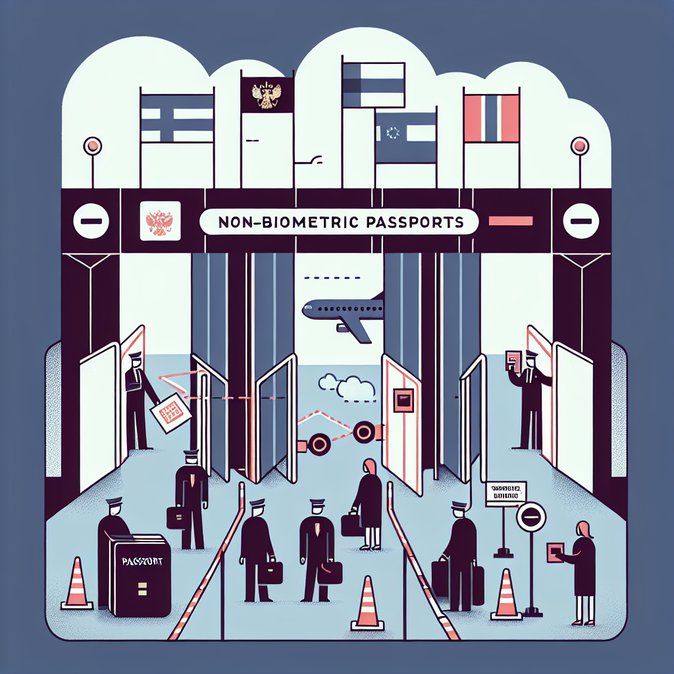
Finland Announces Ban on Non-Biometric Russian Passports From 1 June 2026
Finland will refuse entry to holders of non-biometric Russian passports from 1 June 2026, following an Interior-Ministry decision released on 3 March 2026. The move harmonises Finnish practice with Baltic neighbours, further curtails Russian leisure traffic and obliges employers and carriers to ensure Russian travellers have upgraded passports. Companies should audit documentation now to avoid disruption.

Ireland Extends Temporary Protection for Ukrainian and Other Beneficiaries to March 2027
ISD confirmed on 3 March 2026 that all Temporary Protection permissions — covering most Ukrainian nationals in Ireland — are automatically extended to 4 March 2027. Beneficiaries keep unrestricted work rights, and employers avoid a looming compliance crunch. Holders must still renew their IRP cards even though the yellow certificate may show an expired date.

USCIS Opens FY 2027 H-1B Registration Window with New Weighted Lottery and Possible $100K Surcharge
USCIS will accept FY 2027 H-1B cap registrations March 4–19 and introduce a weighted lottery that boosts selection odds for higher-wage roles. Selected employers may also face a new $100,000 supplemental fee, making budget forecasting and wage-level strategy essential for global-mobility programs. ([wolfsdorf.com](https://wolfsdorf.com/h-1b-cap-registration-opens-march-4-what-employers-and-hr-must-know/))

Record Spring-Festival Ridership on China–Vietnam Overnight Train Caps Cross-Border Travel Rush
Sleeper trains and land checkpoints on the China–Vietnam border handled record numbers over the 2026 Spring-Festival break, helped by streamlined e-clearance and visa-free entry. The surge signals a full rebound of land connectivity and foreshadows expanded capacity and through-ticketing that will benefit business travellers and logistics planners.
First post-crisis Emirates A380s depart DXB as hub moves from shutdown to skeletal schedule
Emirates restarted its long-haul network on 3 March with five A380 flights to Europe and Saudi Arabia, but 80 % of the DXB schedule remains cancelled. Seat supply is extremely tight, forcing companies to prioritise essential travellers and explore alternative routings. The phased restart underscores both Dubai’s resilience and the fragility of global mobility corridors in conflict zones.

Switzerland and EU Sign “Bilaterals III” Package, Modernising Free-Movement Rules
Switzerland and the EU have signed the “Bilaterals III” package, a modernised set of treaties that restores legal certainty for the free movement of people, services and goods. Key points include the abolition of short-term assignment quotas, faster work-permit processing and a digital certificate for commuters. Businesses should prepare for new compliance timelines while watching a potential Swiss referendum.
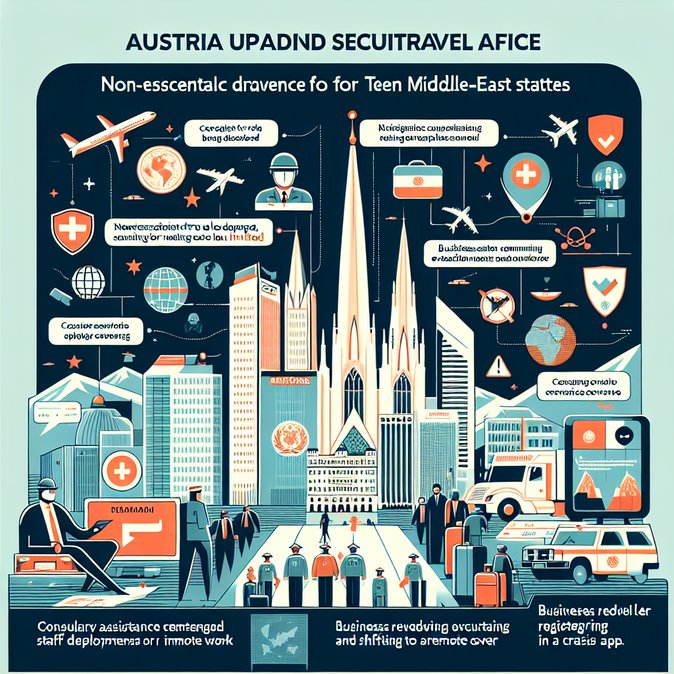
Austria issues highest-level travel warning for ten Middle-East countries
On 3 March 2026 Austria upgraded its travel advice for ten Middle-East states to the maximum Security Level 4. The move effectively bans non-essential travel, limits consular assistance, and obliges businesses to review staff deployments and insurance cover. Companies with regional operations must activate evacuation and remote-working plans, while travellers are urged to register with the Foreign Ministry’s crisis app. The decision underscores escalating regional instability and its knock-on effects on business mobility.

Air France Grounds Middle-East Routes Until 5 March Amid Regional Airspace Closures
Air France has halted all services to Tel Aviv, Beirut, Dubai and Riyadh until at least 5 March, citing regional air-space closures tied to the Iran conflict. The grounding disrupts key business-travel corridors for French firms and forces exporters to seek alternative cargo routings. Mobility managers should activate contingency plans and monitor MEAE advisories.

Germany Extends Internal Border Controls Until 15 September 2026
Berlin has prolonged police checks on all nine land borders for another six months (16 Mar – 15 Sep 2026), citing migration and security concerns. Business and leisure travellers should expect continued document inspections and possible queues, forcing itineraries to build in buffer time. The move signals Germany’s hardening migration posture and will dovetail with the EU Entry/Exit System that launches in April 2026.
Dubai and Abu Dhabi airports restart limited passenger services after unprecedented air-space shutdown
Dubai International and Abu Dhabi Zayed International resumed partial flight operations on 3 March 2026, three days after a blanket closure of Gulf airspace. Only select slots were released, forcing airlines to prioritise repatriation and high-yield sectors. Business travel can restart but remains highly constrained, and corporates are advised to keep evacuation and remote-work plans in place.

UK triggers ‘emergency brake’ on study visas for nationals of Afghanistan, Cameroon, Myanmar and Sudan
The Home Office has frozen new Student visas — and, for Afghans, Work visas — from Afghanistan, Cameroon, Myanmar and Sudan after a surge in asylum claims from holders of those routes. Universities warn of severe recruitment disruption while employers are advised to review talent pipelines. The measure, introduced under a new “emergency brake”, illustrates the UK’s readiness to make rapid, unilateral visa changes.

Poland repeals Ukraine-specific Special Act, shifting refugees to general migration regime
A bill published on 3 March 2026 repeals Poland’s Special Act for Ukrainian refugees. Existing PESEL UKR holders keep temporary-protection status only until 4 March 2027 and must verify identity with a valid passport by 31 August 2026. From 5 March 2026, new business activity and most immigration benefits shift to Poland’s general Foreigners Act, forcing employers to re-plan long-term work and residence strategies for Ukrainian staff.

DHS Announces End of Temporary Protected Status for Yemen, Effective May 4
DHS published a March 3 Federal Register notice ending TPS for Yemen on May 4, 2026, eliminating protection and work authorization for about 9,500 Yemeni nationals. Employers must re-verify I-9s and employees must obtain another status or depart. The move raises operational and humanitarian concerns and could spark litigation. ([akamai-staging.justice.gov](https://akamai-staging.justice.gov/eoir/federal-register-notices-2026))

UK begins extraction of nationals as first evacuation flights leave Dubai amid ‘chaos’
A UK-chartered evacuation flight left Dubai on 3 March, signalling the first organised extraction of British nationals since Gulf airspace closed. With only a trickle of commercial seats available, UK businesses are revamping traveller-tracking and emergency policies while awaiting a fuller resumption of flights.

Brussels Airport keeps Middle-East routes grounded as Iran conflict widens
Brussels Airport confirmed on 3 March that all commercial flights to and from key Middle-East hubs remain cancelled because of regional air-space shutdowns linked to the Iran conflict. Emirates, Etihad and Qatar Airways are operating selective repatriation flights elsewhere in Europe, but none to Brussels. The stand-off leaves more than 100 Belgian holiday-makers stranded and forces companies to reroute staff and freight via alternative EU gateways.

Brazil and European Union seal updated short-stay visa-waiver accord
Decree 12 864 promulgates Brazil’s updated short-stay visa-waiver deal with the EU, guaranteeing 90-day visa-free stays for Brazilian and EU ordinary-passport holders and clarifying permissible business visitor activities. The consolidated 90/180-day calculation removes a compliance headache for corporate travellers, but companies should prepare for strict electronic exit-tracking once the EU Entry/Exit System launches.