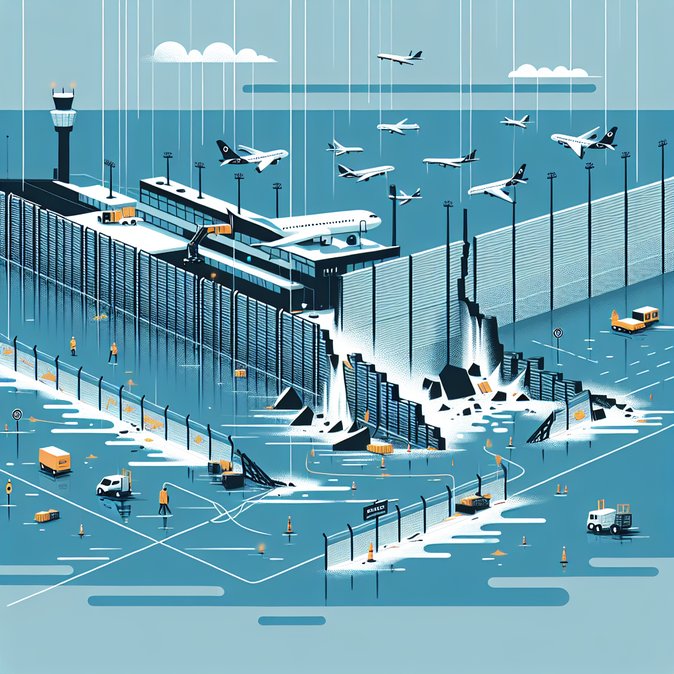
Severe summer storms swept across greater São Paulo on Sunday evening, 8 March 2026, bringing down a 30-metre stretch of the concrete security wall that rings Congonhas Airport. Although no one was injured, images that quickly circulated on social media showed masonry strewn across an apron service road, prompting airport operator Aena Brasil to cordon off the area and trigger its emergency plan. Airlines cancelled 38 departures and 41 arrivals during the peak of the storm. Business travellers connecting the country’s financial capital to Rio de Janeiro, Brasília and Belo Horizonte were the most affected, with knock-on delays reported at downstream airports that depend on the tight Congonhas shuttle schedule. Gol and LATAM offered free rebooking or refunds, while Azul diverted several flights to Campinas-Viracopos until the runway inspection was completed at 22:15. The incident is an early stress test for Aena’s R$ 2 billion modernisation programme, financed in part by a December 2025 BNDES loan, that will expand the terminal and redesign airside logistics. Aviation lawyers note that under Brazil’s concession contracts the private operator, not the government, is liable for infrastructure failures, raising questions about insurance coverage and timetable resilience during the rainy season. For corporate mobility managers, the collapse underscores the importance of contingency planning on Brazil’s busy ‘air bridge’. Experts recommend booking earlier morning flights during the wet season, building buffer time into itineraries and monitoring ANAC’s SIGMET alerts. Travellers should also confirm lounge access at alternative airports such as GRU or Viracopos in case of diversion.
Source: Poder360