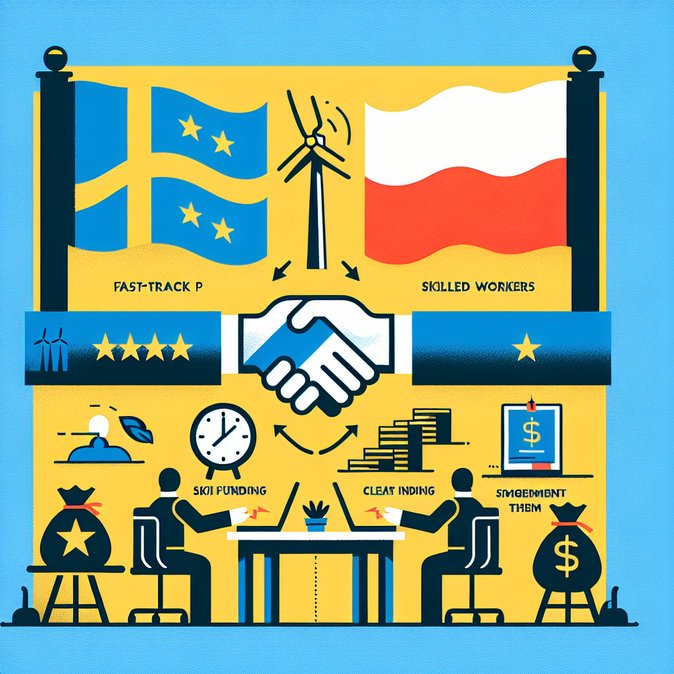
King Carl XVI Gustaf and Queen Silvia landed at Warsaw’s Chopin Airport on 10 March, leading Sweden’s first state visit to Poland in 15 years and accompanied by a 70-strong government and business delegation. President Karol Nawrocki welcomed the royals at the Presidential Palace before bilateral talks that centred on defence co-operation, clean-tech investment and—crucially—easing the movement of skilled workers between the Baltic partners. Later, Foreign Ministers Maria Malmer Stenergard and Radosław Sikorski signed a memorandum creating a "Fast-Track Talent Corridor". The scheme will grant Swedish and Polish engineers, IT specialists and researchers a 30-day decision target for work permits and recognition of digital-only academic credentials. Business Sweden estimates the corridor could cut onboarding times for joint offshore-wind and battery-gigafactory projects by 40 percent. In parallel, the Polish Development Fund and Sweden’s Export Credit Agency announced a €300 million co-financing facility for SME expansions, bundled with multiple-entry Schengen C-visas valid for project staff for up to two years. HR leaders praised the move, noting that protracted Polish work-permit queues have hampered Nordic investment since the pandemic. The visit also spotlighted people-to-people mobility: University rectors agreed to double places on the joint "Sea Baltic" exchange programme, allowing 1,000 extra students to spend a semester abroad without paying additional tuition. A side event at the Scandinavian-Polish Chamber of Commerce saw start-ups pitch cross-border digital-nomad packages blending Stockholm’s fintech scene with Kraków’s AI hubs. The state visit continues in Gdańsk and Malmö-linked ports on 11–12 March, but the first-day accords already give companies a clear framework to deploy staff faster on both sides of the Baltic, reinforcing Poland’s push to brand itself as northern Europe’s next innovation hub.