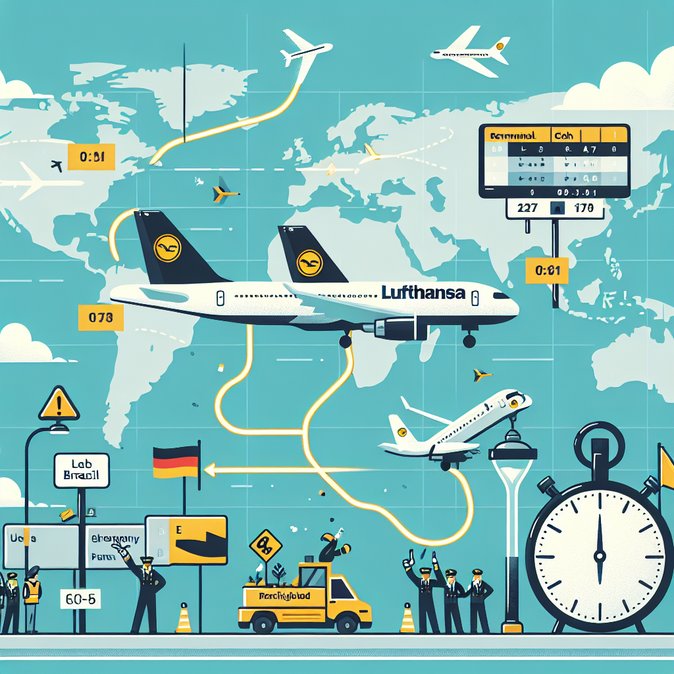
Business travellers shuttling between Brazil and Europe faced fresh disruption on Monday, 13 April, as Lufthansa pilots walked off the job for a 48-hour pay dispute. According to an AFP dispatch carried by the Brazilian daily O Povo, the strike forced the German flag-carrier to ground roughly 570 flights—about 43 % of the day’s schedule—out of its Frankfurt and Munich hubs. The cancellations included long-haul services LH 506/507 (Frankfurt–São Paulo) and LH 500/501 (Frankfurt–Rio de Janeiro), severing a key non-stop link for executives, engineers and life-science specialists who rely on Germany’s automotive and pharmaceutical supply chains. The pilot union Vereinigung Cockpit is demanding above-inflation wage increases and improved pension terms. Lufthansa management called the demands “absurd”, but with Germany’s collective-bargaining season in full swing, analysts predict further short-notice walkouts across the aviation sector. The action follows a 90 % cabin-crew strike last Friday that nearly paralysed Lufthansa’s network, underscoring the fragility of global mobility even as passenger numbers approach pre-pandemic levels. Travel-management companies in Brazil scrambled to re-route clients via Iberia, Air France-KLM and TAP, but alternative seats in the Easter shoulder-season were scarce. PETROBRAS and Embraer both confirmed postponements of technical meetings in Hamburg and Stuttgart, highlighting the knock-on effect on project timelines. Freight forwarders also warned of delays for high-value air cargo—particularly automotive components—because Lufthansa Cargo shares pilot resources with the passenger divisions. For Brazilian firms with intra-company transferees in Germany, immigration advisers recommend keeping copies of local residence permits (Aufenthaltstitel) and travel insurance certificates on hand; re-booking via third countries may trigger additional Schengen entry checks under the EU’s new biometric Entry/Exit System. Companies are also reminded that Germany caps compensation for flight delays at €600 under EU261 rules, which do not apply if passengers accept re-routing via another carrier. Looking ahead, the strike adds weight to calls from Brazil’s National Confederation of Industry (CNI) for a dedicated São Paulo–Berlin route to diversify access points. In the meantime, corporates are urged to maintain contingency budgets and use mobile-tracking apps to alert travellers of sudden cancellations—a practice that global mobility managers say is now indispensable in an era of frequent labour unrest.
Source: O Povo / AFP