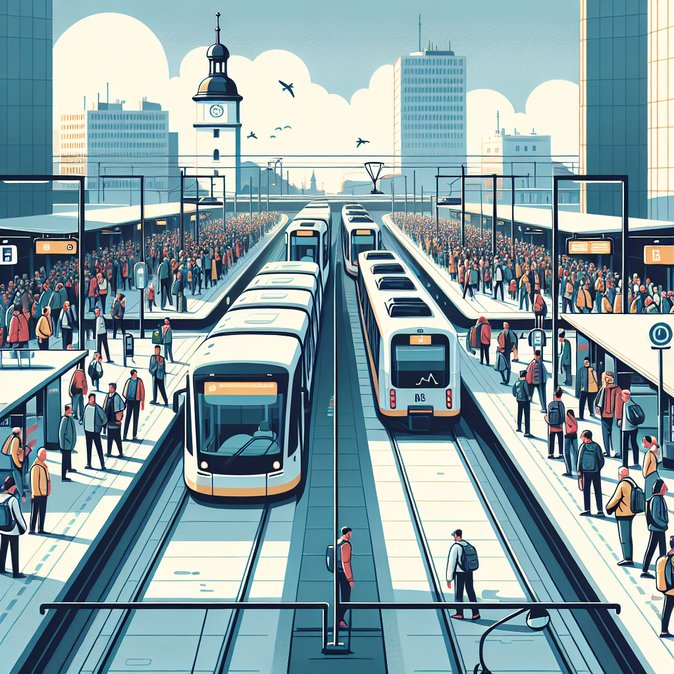
The Verdi union staged a 24-hour warning strike across Munich’s public-transport operator MVG on 14 April 2026, shutting the city’s U-Bahn, trams and most bus lines. Deutsche Bahn’s S-Bahn suburban rail network continues to operate, but capacity strains are reported during rush hour as commuters crowd onto alternative services. The walk-out, part of public-sector wage negotiations, overlaps with the Lufthansa pilots’ strike, compounding mobility headaches for travellers connecting through Munich Airport. DB has warned of bottlenecks at central stations as airport-bound passengers funnel onto the remaining S1 and S8 services before transferring to rail-replacement buses—already in place due to construction works on the airport link. For employers, same-day meetings in Munich risk delays; many have switched to remote work or chartered coaches. Short-term assignees arriving for visa appointments at the Bavarian Foreigners’ Authority are urged to factor in an extra hour of travel. The strike ends at 03:00 on 15 April, but Verdi threatens further action if talks stall. City officials estimate each full-day strike costs the regional economy €7 million in lost productivity. Mobility managers should monitor updates via the MVGO app and budget for taxi surcharges—rideshare prices spiked 180 % during the morning peak. In a broader context, escalating transport strikes underscore the fragility of Germany’s urban mobility ecosystem just as the country courts foreign talent under its new Skilled Immigration Act. Reliable last-mile transport will be key to keeping expatriate staff satisfied.
Source: news.de