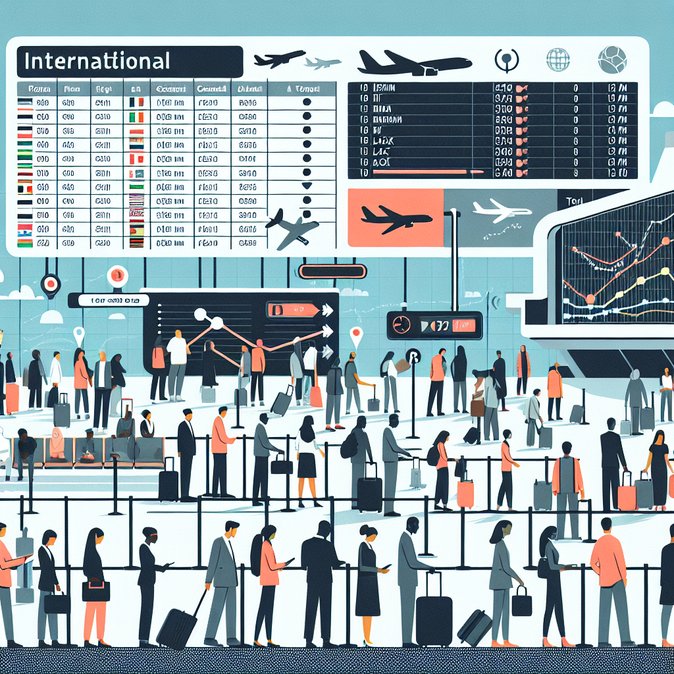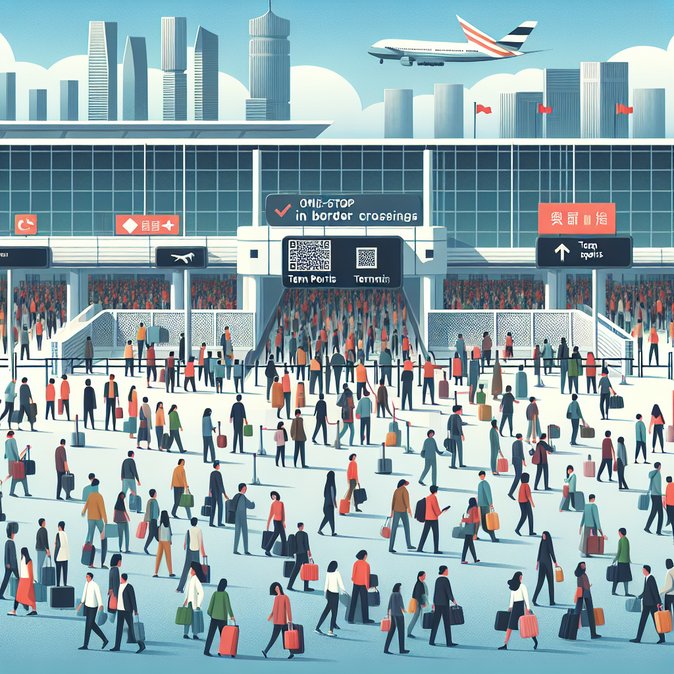
Beijing’s border check points have passed another milestone only four months into the year. According to the Beijing General Station of Exit & Entry Frontier Inspection, total exits and entries at the capital’s airports, rail and road crossings exceeded 7 million at 08:00 on 26 April—-13 percent higher than the same period last year. Of these, more than 2.28 million were foreign nationals, a 34 percent jump year-on-year. Border officials say the growth is being driven by China’s rapidly expanding unilateral visa-free programme (now covering 50 countries) and its 240-hour transit-without-visa (TWOV) policy for 55 countries. In response, Beijing Capital International Airport and Daxing International Airport have unveiled a “one-stop” counter that lets eligible passengers obtain a temporary entry permit, complete border inspection and receive multi-lingual guidance on the digital arrival card in a single queue. The desk operates 24 hours and is staffed by English, Japanese, Korean and French-speaking officers. The capital is also trialling real-time passenger-flow analytics that match staffing to live queue lengths. Additional e-channels and mobile passport readers have been deployed at Terminal 3, while airlines have been asked to stagger check-in cut-off times to flatten peaks. Travellers using the 240-hour TWOV are now given a QR code that links to a city-services mini-app with hotel registration, police reporting and tourist information. For global mobility managers the message is clear: visa-free and transit-without-visa entry is becoming a mainstream option for short-term business travel to China. Companies should, however, remind staff that TWOV entrants cannot convert their status in-country and must still register their address with police within 24 hours. The ability to complete all procedures at a single desk should shorten air-side connection times, but early arrival—-especially during upcoming Labour-Day peaks—-is still recommended. Beijing’s experience will act as a blueprint for other major Chinese gateways; Shanghai Pudong is scheduled to open its own integrated desk before the summer holidays, and Guangzhou Baiyun is testing the model with cruise passengers.