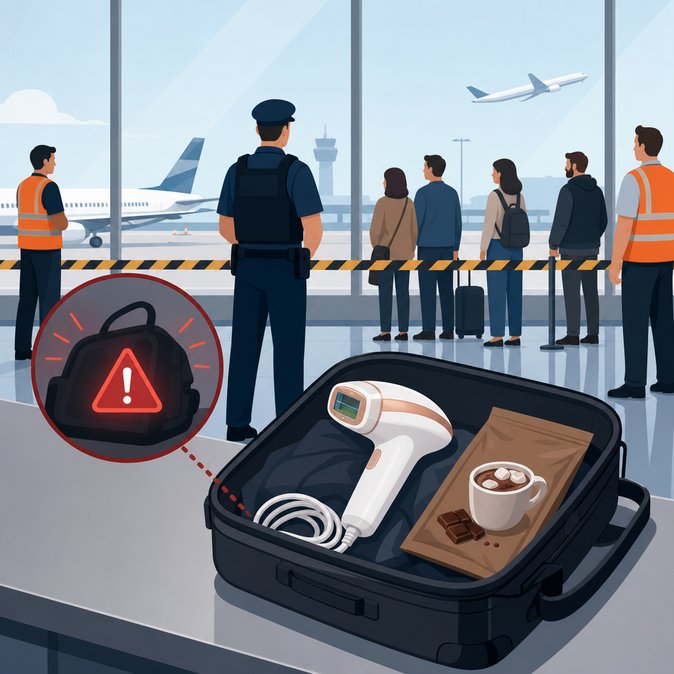
Passengers travelling through Melbourne’s Avalon Airport (AVV) on the morning of 23 May faced cancellations and cascading delays after security screeners flagged a suspicious electronic device and powdered substance in a carry-on bag. Victoria Police’s Bomb Response Unit evacuated parts of the terminal around 06:00 AEST and cordoned the airside apron while x-ray technicians and explosives officers examined the items—later identified as a laser hair-removal handset and a tin of hot-chocolate mix. The passenger who owned the bag was briefly detained for questioning; no charges were laid and he subsequently boarded a later flight to Sydney. Although the incident proved harmless, the four-hour shutdown forced Qantas and Jetstar to cancel two morning services and delay several others, disrupting onward connections for both business and leisure travellers. Airport management said the episode demonstrates “the vigilance of screening procedures” and advised passengers to keep electronic beauty devices in original packaging to avoid misinterpretation by x-ray operators. For corporate travel managers, the scare serves as another reminder that small regional airports can create network-wide knock-ons: even minor disruptions at Avalon can ripple into Qantas’s east-coast shuttle schedules, potentially affecting same-day meeting itineraries. Travellers are advised to monitor airline apps and build buffer time into connections—especially when carrying unusual electronic equipment. The incident also highlights the expanding list of items that trigger enhanced screening under Australia’s Aviation Transport Security Regulations. Companies sending employees with specialised equipment—such as medical devices or prototype electronics—should supply detailed documentation to minimise the risk of costly evacuations and missed flights.
Source: Travel Radar