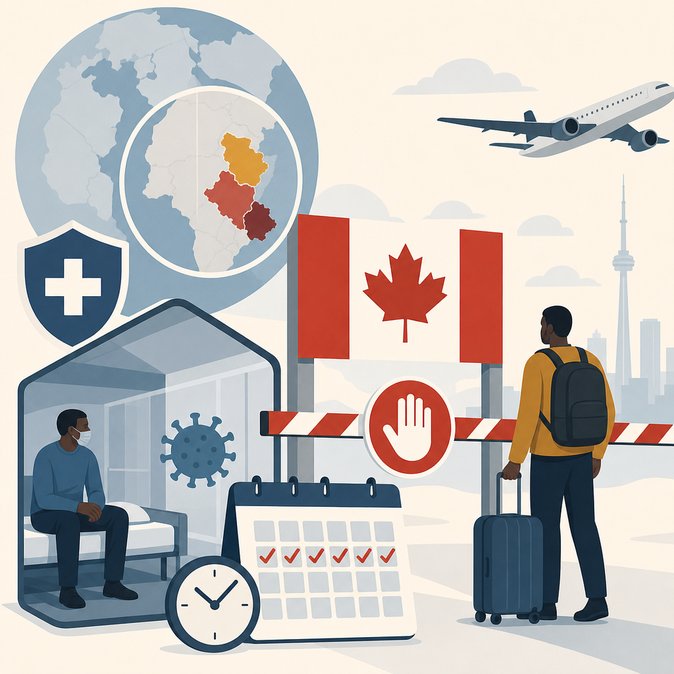
The Public Health Agency of Canada (PHAC) has mounted a vigorous defence of new border measures that bar most foreign nationals from the Democratic Republic of Congo (DRC), Uganda and South Sudan and impose a 21-day quarantine on anyone—citizen or visitor—who has recently been in those countries. The restrictions, announced 27 May and elaborated in a 28 May statement, will run until at least 29 August 2026. PHAC officials told reporters the precautions are necessary as health workers struggle to contain a rare Bundibugyo-strain Ebola outbreak centred in Ituri province, DRC. Canada, the United States and Mexico have coordinated identical rules to limit importation risks ahead of large-scale events such as the FIFA World Cup. Critics, including infectious-disease experts and the World Health Organization, argue that broad travel bans lack scientific basis, can hamper outbreak response and stigmatise entire regions. Nonetheless, IRCC has paused final decisions on immigration and visa applications from the three countries for at least 90 days, affecting students, workers and reunification cases. For global mobility teams, the measures create immediate compliance challenges. Employees or contractors who have travelled through the affected regions must arrange government-approved isolation plans and may face project delays. Organisations involved in humanitarian work should anticipate longer timelines for deploying Canadian staff abroad and for repatriation. PHAC says it will review the policy every 30 days. Employers are advised to update duty-of-care protocols, track employee travel history more closely, and budget for quarantine accommodations where necessary. Travel insurers are also revising coverage terms to reflect the new mandatory isolation requirement.
Source: CityNews / The Canadian Press