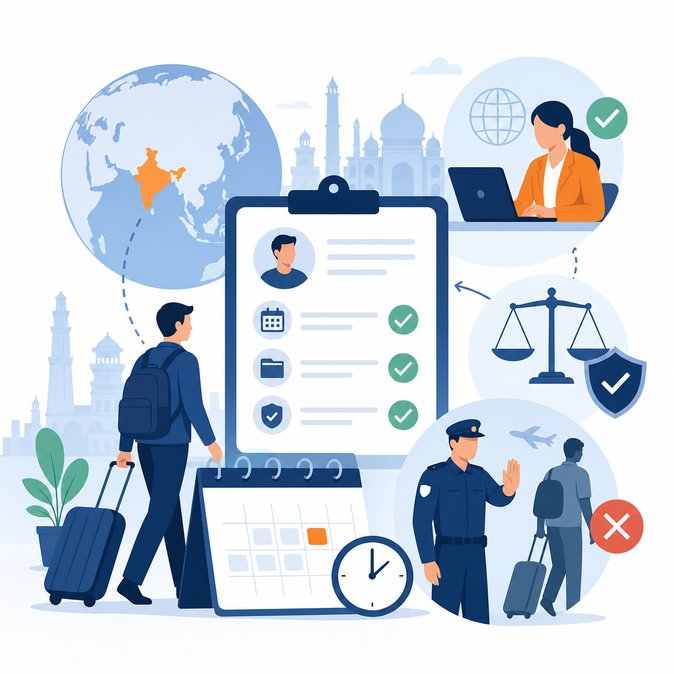
The Ministry of Home Affairs (MHA) has issued the Immigration and Foreigners (Amendment) Rules 2026, overhauling how foreign nationals living in India register, extend stay and appeal compliance decisions. The Gazette notification was released on 1 June and published by mainstream outlets on 2–3 June, making the changes immediately enforceable. Key among the reforms is a shift in timing: visitors holding visas valid for 180 days or more must now apply for registration *before* their initial 180-day period ends, replacing the previous allowance of 14 days *after* overstay. Extensions in excess of 180 days will only be approved in “emergent circumstances,” a phrase officials say is deliberately narrow to deter visa gaming. Registration can be completed through an expanded online Foreigner Registration Portal or a new mobile app, reducing the need for in-person visits to Foreigners Regional Registration Offices (FRROs). The amendment also streamlines family provisions. Parents no longer have to report the birth of a child within 30 days when one parent is an Indian citizen and wishes the child to retain Indian citizenship, eliminating a paperwork headache often faced by mixed-nationality couples. Separately, medical facilities must now notify FRROs within 24 hours of a foreign patient’s discharge, closing a loophole that occasionally allowed long-term stays via repeated medical visas. For property owners and hotels, the rules introduce an electronic appeal mechanism: premises sealed for harbouring illegal migrants can petition the Bureau of Immigration commissioner online within 30 days, replacing a paper process routed to the central government. Compliance experts note that automating appeals should accelerate case resolution and reduce revenue losses for affected landlords. Global mobility managers should review assignment handbooks and brief expatriate staff, particularly long-term assignees on employment, student or journalist visas. Missing the new **pre-expiry** registration deadline could trigger fines, blacklisting or immediate departure orders. Companies are advised to schedule automatic reminders 30 days before day 180, ensure HR business partners have FRRO log-ins, and budget for possible courier costs where biometrics are required.
Source: The Times of India