The Brussels regional authorities have warned of “major traffic disruptions” from Saturday evening through late Sunday, 13 June, as multiple events converge on the capital.
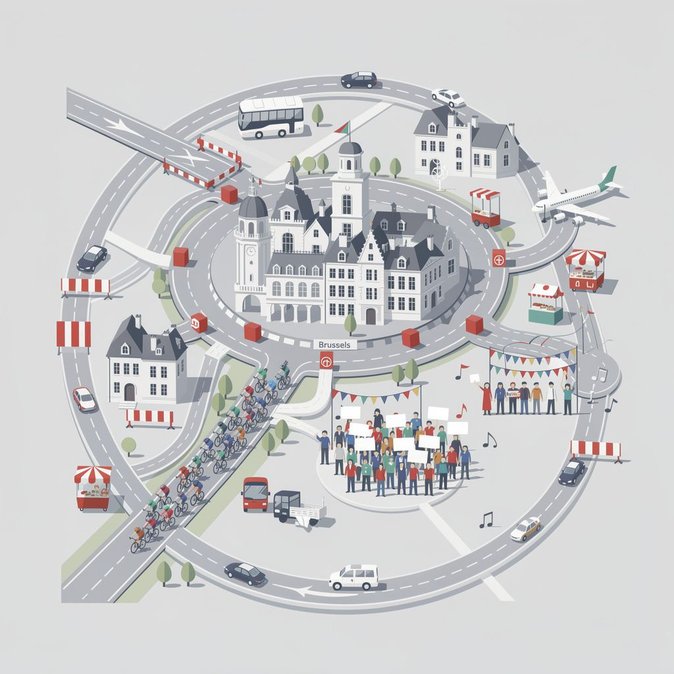
The 10th edition of the BXL Tour cycling race will shut down a 40-km circuit of central and eastern boulevards between 07:00 and 13:00, forcing diversions of airport buses and several key arterials used by hotel shuttles.
Later in the afternoon an anti-military-spending march organised by NGOs such as Oxfam and Greenpeace will depart near Brussels-North station and head towards the EU Quarter, a route that passes several business hotels and the Schuman metro interchange.
Police expect several thousand participants and have authorised rolling roadblocks until 17:30.
Neighbourhood street festivals in Saint-Gilles, Anderlecht and Uccle, plus the weekly Roller Bike Parade on Sunday night, add to the closure map, affecting tram lines 3, 4 and 7 as well as STIB/MIVB bus routes connecting to Brussels Airport.
Taxi unions have announced a surcharge for pick-ups within the inner ring during the race window, citing congestion costs.
For travellers who still need to finalise paperwork for Belgium or other Schengen destinations, VisaHQ offers an online platform that streamlines visa and passport services, saving a trip to the consulate amid the expected gridlock. Their Belgium page (https://www.visahq.com/belgium/) lists current entry requirements and turnaround times, allowing corporate travel coordinators to handle documentation early and focus on rerouting ground transport.
Travel-management companies are advising delegates arriving for Monday EU Council meetings to switch to the airport rail link, which is unaffected, or to pre-book hotel rooms within walking distance of the Schuman district.
International assignees using personal vehicles should plan Ring-Road detours via the E40 at Groot-Bijgaarden when entering the city from the north.
While the disruptions are local, their timing—coinciding with the first weekend of the summer conference season—illustrates how urban mobility issues can ripple into cross-border travel plans.
Companies running field-service teams or crew changes through Brussels should adjust duty-of-care protocols and allow extra transfer time between rail hubs and meeting venues.
The 10th edition of the BXL Tour cycling race will shut down a 40-km circuit of central and eastern boulevards between 07:00 and 13:00, forcing diversions of airport buses and several key arterials used by hotel shuttles.
Later in the afternoon an anti-military-spending march organised by NGOs such as Oxfam and Greenpeace will depart near Brussels-North station and head towards the EU Quarter, a route that passes several business hotels and the Schuman metro interchange.
Police expect several thousand participants and have authorised rolling roadblocks until 17:30.
Neighbourhood street festivals in Saint-Gilles, Anderlecht and Uccle, plus the weekly Roller Bike Parade on Sunday night, add to the closure map, affecting tram lines 3, 4 and 7 as well as STIB/MIVB bus routes connecting to Brussels Airport.
Taxi unions have announced a surcharge for pick-ups within the inner ring during the race window, citing congestion costs.
For travellers who still need to finalise paperwork for Belgium or other Schengen destinations, VisaHQ offers an online platform that streamlines visa and passport services, saving a trip to the consulate amid the expected gridlock. Their Belgium page (https://www.visahq.com/belgium/) lists current entry requirements and turnaround times, allowing corporate travel coordinators to handle documentation early and focus on rerouting ground transport.
Travel-management companies are advising delegates arriving for Monday EU Council meetings to switch to the airport rail link, which is unaffected, or to pre-book hotel rooms within walking distance of the Schuman district.
International assignees using personal vehicles should plan Ring-Road detours via the E40 at Groot-Bijgaarden when entering the city from the north.
While the disruptions are local, their timing—coinciding with the first weekend of the summer conference season—illustrates how urban mobility issues can ripple into cross-border travel plans.
Companies running field-service teams or crew changes through Brussels should adjust duty-of-care protocols and allow extra transfer time between rail hubs and meeting venues.