Low-cost giant Ryanair warned on 12 June that it will remove five Boeing 737s from its Brussels South Charleroi base this winter if Belgium doubles its passenger-flight tax to €22. CEO Michael O’Leary, speaking in Dublin, blasted the measure as “anti-tourism and anti-regional-jobs”, noting that the carrier carries nine million passengers a year through Charleroi.
While airline strategies shift, corporate travel planners can at least keep paperwork from getting as turbulent. VisaHQ’s Belgium service (https://www.visahq.com/belgium/) enables firms and individual travellers to verify entry rules, obtain e-visas or transit documents online, and manage employee passports in one secure dashboard—handy when itineraries suddenly change because flights move to other hubs.
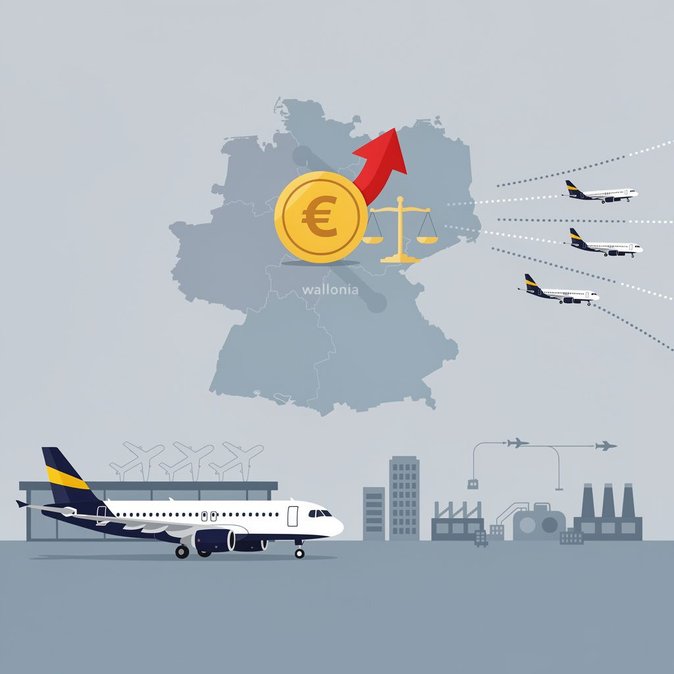
Losing five aircraft would slash Charleroi’s seat capacity by roughly 20 %, jeopardising direct links to 35 EU cities and undermining Wallonia’s efforts to attract investment to its southern provinces. Airport operator BSCA calculates that each based jet supports 30 on-site jobs and up to 750 indirect positions in hospitality and logistics. For mobility managers, reduced frequencies and higher ticket prices could push travellers onto the already congested Brussels Airport or onto rail – while cargo belly-hold capacity in Charleroi would shrink. O’Leary signalled that Ryanair could redeploy the planes to Poland or Italy, where governments have frozen taxes to stimulate connectivity. Belgium’s federal cabinet says the tax rise is part of its green transition plan and notes that Ryanair has made similar threats in other jurisdictions. Consultations continue, but companies with large intra-EU travel volumes should factor higher costs or longer surface-travel times into 2027 budgets.
While airline strategies shift, corporate travel planners can at least keep paperwork from getting as turbulent. VisaHQ’s Belgium service (https://www.visahq.com/belgium/) enables firms and individual travellers to verify entry rules, obtain e-visas or transit documents online, and manage employee passports in one secure dashboard—handy when itineraries suddenly change because flights move to other hubs.
Losing five aircraft would slash Charleroi’s seat capacity by roughly 20 %, jeopardising direct links to 35 EU cities and undermining Wallonia’s efforts to attract investment to its southern provinces. Airport operator BSCA calculates that each based jet supports 30 on-site jobs and up to 750 indirect positions in hospitality and logistics. For mobility managers, reduced frequencies and higher ticket prices could push travellers onto the already congested Brussels Airport or onto rail – while cargo belly-hold capacity in Charleroi would shrink. O’Leary signalled that Ryanair could redeploy the planes to Poland or Italy, where governments have frozen taxes to stimulate connectivity. Belgium’s federal cabinet says the tax rise is part of its green transition plan and notes that Ryanair has made similar threats in other jurisdictions. Consultations continue, but companies with large intra-EU travel volumes should factor higher costs or longer surface-travel times into 2027 budgets.