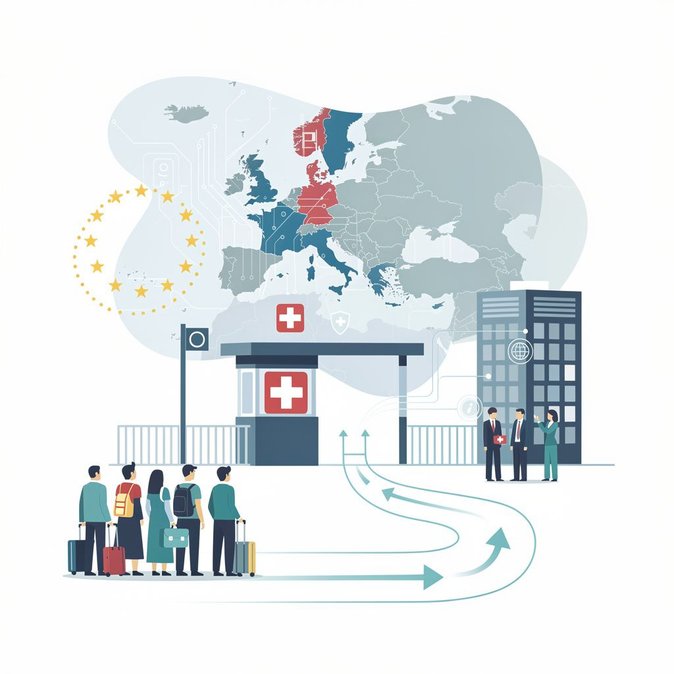
A watershed reform of Europe’s migration system entered into application today, and Switzerland—though not an EU member—will apply large parts of it as a Schengen-associated state. The Pact on Migration and Asylum standardises border screening, accelerates asylum decisions and introduces a mandatory solidarity mechanism among participating countries. Swiss authorities will now record fingerprints, facial images and basic biographical data of all irregular arrivals aged six and above into the upgraded Eurodac database within seven days.
For travellers, HR departments and relocation firms trying to keep pace with these swift procedural changes, VisaHQ offers a one-stop digital solution. The platform’s Switzerland portal (https://www.visahq.com/switzerland/) provides real-time updates on Schengen and national visa rules, generates customised document checklists and tracks application status, helping users stay compliant while avoiding costly delays.
The aim is to curb so-called secondary movements—situations where asylum seekers lodge claims in one state and then move on to another, often Switzerland, before a decision is taken. Businesses that rely on short-notice talent from outside Europe should be aware that the Pact preserves existing channels for legal migration but toughens return procedures for rejected applicants. Employers sponsoring non-EU staff must therefore monitor case timelines closely: once a negative decision is final, deportations will accelerate, and overstaying could trigger longer re-entry bans across the Schengen area. Politically, Bern emphasises that alignment with the Pact keeps Swiss external borders in sync with its neighbours—an essential condition for frictionless goods trade and cross-border commuting. Federal migration offices now have nine months to issue detailed ordinances, but frontline police and cantonal migration bureaus began using the new screening checklists from 00:01 this morning.
For travellers, HR departments and relocation firms trying to keep pace with these swift procedural changes, VisaHQ offers a one-stop digital solution. The platform’s Switzerland portal (https://www.visahq.com/switzerland/) provides real-time updates on Schengen and national visa rules, generates customised document checklists and tracks application status, helping users stay compliant while avoiding costly delays.
The aim is to curb so-called secondary movements—situations where asylum seekers lodge claims in one state and then move on to another, often Switzerland, before a decision is taken. Businesses that rely on short-notice talent from outside Europe should be aware that the Pact preserves existing channels for legal migration but toughens return procedures for rejected applicants. Employers sponsoring non-EU staff must therefore monitor case timelines closely: once a negative decision is final, deportations will accelerate, and overstaying could trigger longer re-entry bans across the Schengen area. Politically, Bern emphasises that alignment with the Pact keeps Swiss external borders in sync with its neighbours—an essential condition for frictionless goods trade and cross-border commuting. Federal migration offices now have nine months to issue detailed ordinances, but frontline police and cantonal migration bureaus began using the new screening checklists from 00:01 this morning.