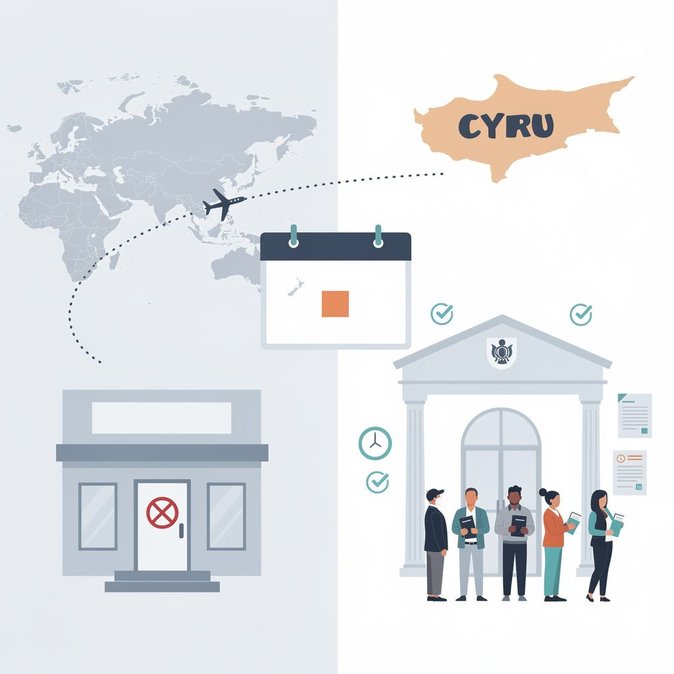
The Cypriot embassy in Moscow has confirmed that all third-party visa-application centres run by BLS International across Russia will stop accepting files from 15 June, after the service contract expired. From that date, Russian travellers wishing to visit Cyprus must lodge their paperwork in person at Cypriot consulates in Moscow, St Petersburg, Yekaterinburg or Krasnodar and allow at least 15 days before departure for processing. Although Cyprus is an EU member, it is outside the Schengen Area and therefore issues its own national visas.
VisaHQ can help applicants navigate these new requirements. Its Cyprus portal (https://www.visahq.com/cyprus/) offers step-by-step checklists, appointment tips and document pre-screening services, enabling both individual travellers and corporate mobility teams to minimise errors before they reach the consulate.
Since the EU suspended its visa-facilitation agreement with Russia in 2022, most member states have tightened the issuance of multi-entry visas; Cyprus followed suit last November and introduced mandatory biometric capture in October 2025. Consular officers therefore already handle more complex checks, and officials said the temporary re-centralisation would help maintain security standards until a new outsourcing contract is signed. For corporate mobility managers this means longer lead-times and higher logistics costs for Russian assignees: applicants must now travel—sometimes thousands of kilometres—to a consulate, queue in person, and leave original passports for at least two weeks. Employers should adjust project timelines, factor in travel expenses and monitor the embassy website for the announcement of a new external provider. The episode also signals a broader trend: EU states are reassessing large outsourcing contracts in sensitive jurisdictions to regain control over biometrics and data security. Mobility teams with regional visa-centre contracts elsewhere in the CIS should review service-level agreements and contingency plans. Finally, Russian nationals who already filed through BLS before 11 June can still collect their passports at those centres, but any additions or corrections must be handled directly by consulates, creating split processes companies must track carefully.
VisaHQ can help applicants navigate these new requirements. Its Cyprus portal (https://www.visahq.com/cyprus/) offers step-by-step checklists, appointment tips and document pre-screening services, enabling both individual travellers and corporate mobility teams to minimise errors before they reach the consulate.
Since the EU suspended its visa-facilitation agreement with Russia in 2022, most member states have tightened the issuance of multi-entry visas; Cyprus followed suit last November and introduced mandatory biometric capture in October 2025. Consular officers therefore already handle more complex checks, and officials said the temporary re-centralisation would help maintain security standards until a new outsourcing contract is signed. For corporate mobility managers this means longer lead-times and higher logistics costs for Russian assignees: applicants must now travel—sometimes thousands of kilometres—to a consulate, queue in person, and leave original passports for at least two weeks. Employers should adjust project timelines, factor in travel expenses and monitor the embassy website for the announcement of a new external provider. The episode also signals a broader trend: EU states are reassessing large outsourcing contracts in sensitive jurisdictions to regain control over biometrics and data security. Mobility teams with regional visa-centre contracts elsewhere in the CIS should review service-level agreements and contingency plans. Finally, Russian nationals who already filed through BLS before 11 June can still collect their passports at those centres, but any additions or corrections must be handled directly by consulates, creating split processes companies must track carefully.