
German leisure carrier Condor and Abu Dhabi-based Etihad Airways are moving their budding commercial partnership into a second phase with the launch of a daily Abu Dhabi-Bangkok fifth-freedom service to be operated by Condor’s new Airbus A330-900neo jets. Announced on 13 June during the IATA AGM in Rio de Janeiro, the new sector—for which tickets will open later this month—will be timed to connect smoothly with Condor’s overnight Frankfurt-Abu Dhabi rotation and Etihad’s morning wave of departures to Australia, India and the Gulf. For corporate travel managers in the UAE this means additional seat inventory and fare options on the Bangkok trunk route at a time when Asia-bound demand is rebounding sharply. Because the flight is covered by a broad interline and loyalty-points agreement, passengers originating in the Emirates will be able to accrue or redeem Etihad Guest miles on the Condor-operated sector, while German corporates gain easier access to Etihad’s long-haul network beyond Abu Dhabi—particularly to destinations such as Melbourne, Manila and Nairobi. From an aviation-hub perspective, the deal reinforces Abu Dhabi’s strategy of luring non-Gulf carriers to operate onward sectors that funnel traffic through the capital without Etihad having to deploy its own metal. Airport operator AD Airports Company has been investing heavily in quick-turn infrastructure and transit lounges to make such ‘virtual hub’ arrangements attractive. Analysts point out that Condor’s ability to sell the standalone AUH-BKK leg will stimulate both inbound leisure flows to the UAE and two-way business travel with Thailand. The cooperation also extends to IT and customer-service alignment. Over the next quarter the two airlines will integrate API data feeds so that real-time re-booking and disruption management can be handled from a single back-end platform—an important improvement for mobility managers seeking duty-of-care visibility across multi-carrier itineraries. Looking ahead, industry observers expect the partners to explore additional fifth-freedom sectors—Salalah and Zanzibar have been mentioned—cementing Abu Dhabi’s role as a competitive alternative to Dubai for inter-continental transfers.
Source: Aviation Analysis
How VisaHQ can help
VisaHQ simplifies the visa application process for individuals and businesses. Check current travel requirements, prepare the required documents and manage your application online through the VisaHQ United Arab Emirates portal.More From United Arab Emirates
View all
UAE forms Federal Authority for Artificial Intelligence and Data, paving way for unified digital visa and immigration platforms
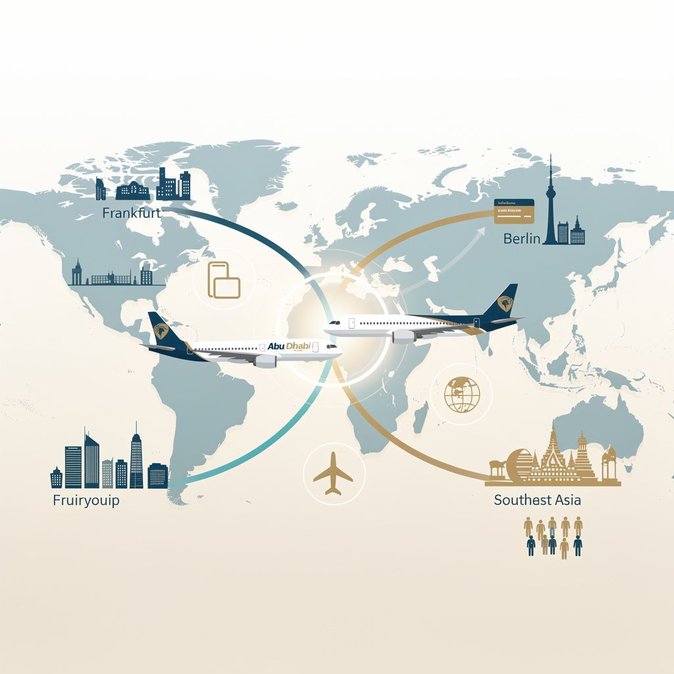
Etihad and Condor Seal Frequent-Flyer Pact and Launch Abu Dhabi–Bangkok ‘Fifth-Freedom’ Route