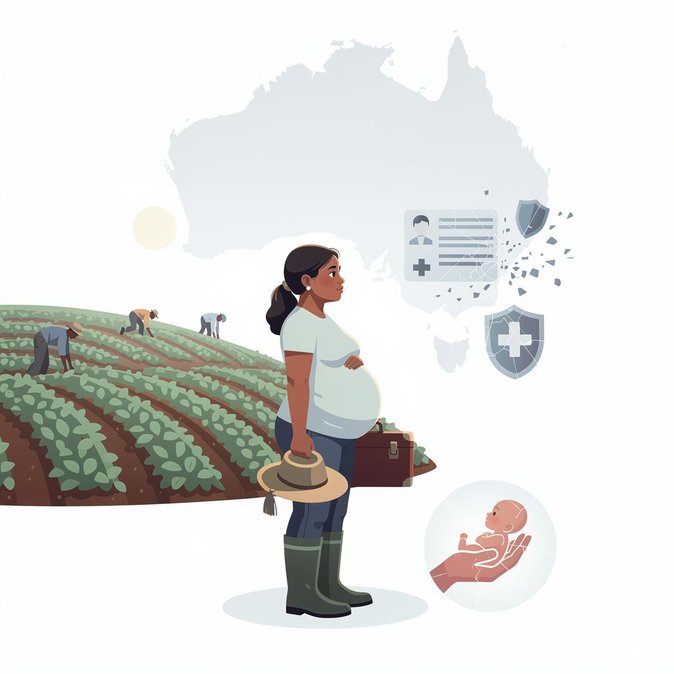
A searing ABC long-read published this morning lifts the lid on a hidden cohort of temporary and former Pacific Australia Labour Mobility (PALM) workers who have become undocumented after leaving, or being pushed out of, their approved farm jobs. Many women discover they are pregnant while still on the farms. Once they disengage from PALM, they immediately lose Medicare eligibility, private workplace insurance and the right to work legally. The investigation follows one Vanuatu worker, “Priscilla”, through a precarious pregnancy spent leaf-stripping grape vines in northern Victoria before giving birth in debt and without immigration status. Researchers estimate thousands of Pacific island mothers and Australian-born children now live in this limbo.
Navigating Australia’s complex visa requirements in these situations can be daunting, but specialist facilitators such as VisaHQ make the process far more straightforward. Through its dedicated Australian portal (https://www.visahq.com/australia/), VisaHQ offers clear, step-by-step guidance on visa extensions, family-reunion applications and status-regularisation options, helping vulnerable workers—and their Australian-born children—secure lawful pathways to remain or safely return home.
Because the Department of Employment and Workplace Relations does not collect pregnancy data and disengaged workers rarely present to hospitals, there is no official record of how many babies are being born without birth certificates or visas. Midwives in rural Sunraysia told the ABC they regularly see pregnant PALM workers only in the second or third trimester, creating serious clinical and child-protection risks. The exposé also highlights structural problems in the PALM scheme. Until late-2025, employers were not obliged to guarantee a minimum 120 hours of work per month, leaving some workers unable to cover deductions for flights, visas and accommodation. Many women quit “sponsoring” farms to seek cash work, automatically voiding their visas. Once undocumented, they cannot easily return home because remittances promised to extended families have not materialised and future Australian work rights evaporate. Policy specialists argue the government must urgently allow dependants to accompany workers, expand Medicare access for pregnancy care, and create a special pathway to regularise status for disengaged PALM participants. For employers, the story is a warning that welfare failings can jeopardise the future of the $2-billion PALM pipeline that agribusiness increasingly relies on to fill labour shortages. Multinationals using Australian produce in global supply chains should review due-diligence processes to ensure they are not exposed to modern-slavery reputational risk.
Navigating Australia’s complex visa requirements in these situations can be daunting, but specialist facilitators such as VisaHQ make the process far more straightforward. Through its dedicated Australian portal (https://www.visahq.com/australia/), VisaHQ offers clear, step-by-step guidance on visa extensions, family-reunion applications and status-regularisation options, helping vulnerable workers—and their Australian-born children—secure lawful pathways to remain or safely return home.
Because the Department of Employment and Workplace Relations does not collect pregnancy data and disengaged workers rarely present to hospitals, there is no official record of how many babies are being born without birth certificates or visas. Midwives in rural Sunraysia told the ABC they regularly see pregnant PALM workers only in the second or third trimester, creating serious clinical and child-protection risks. The exposé also highlights structural problems in the PALM scheme. Until late-2025, employers were not obliged to guarantee a minimum 120 hours of work per month, leaving some workers unable to cover deductions for flights, visas and accommodation. Many women quit “sponsoring” farms to seek cash work, automatically voiding their visas. Once undocumented, they cannot easily return home because remittances promised to extended families have not materialised and future Australian work rights evaporate. Policy specialists argue the government must urgently allow dependants to accompany workers, expand Medicare access for pregnancy care, and create a special pathway to regularise status for disengaged PALM participants. For employers, the story is a warning that welfare failings can jeopardise the future of the $2-billion PALM pipeline that agribusiness increasingly relies on to fill labour shortages. Multinationals using Australian produce in global supply chains should review due-diligence processes to ensure they are not exposed to modern-slavery reputational risk.