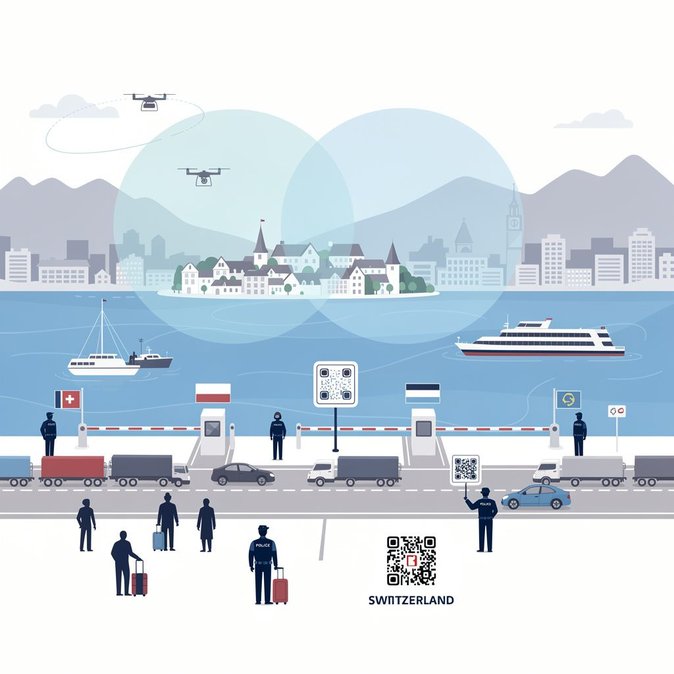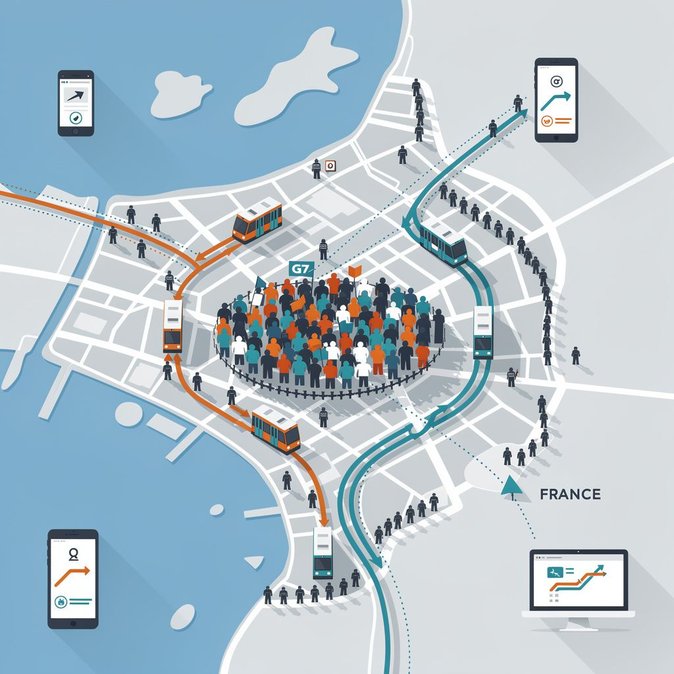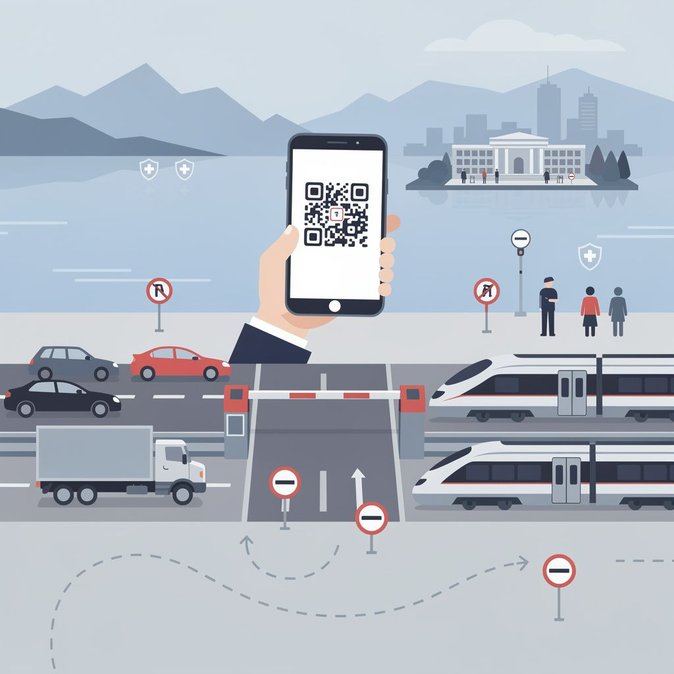
With the arrival of the G7 leaders on Monday, June 15, French authorities have moved ahead with the most extensive security cordon seen since the Paris climate summit in 2015. In the early hours of Sunday, June 14, police began erecting mobile barriers and concrete blocks on both the French and Swiss sides of Lake Geneva. According to the Ministry of the Interior, just seven of the usual 35 road and rail crossings between Haute-Savoie and the cantons of Geneva / Vaud will remain open from 00:01 on 14 June until the evening of 18 June. Commercial vehicles above 3.5 tonnes are being routed hundreds of kilometres west via the Fréjus and Mont-Blanc tunnels, while tourist coaches must apply for time-stamped permits. Inside France the so-called “red” and “blue” perimeters surround Évian-les-Bains, Neuvecelle and Publier. Anyone—resident, hotel guest, delegate or supplier—must carry a QR-code Pass G7 to enter. Businesses have been told to stagger deliveries outside the 06:00-22:00 window; many hotels have arranged collective shuttle transfers for staff who no longer have direct road access. Airspace is equally tight. Low-altitude zones R248A/B and R249 are activated over the lake, banning drones, paragliders and even recreational sailing for the duration of the summit. Lyon St-Exupéry is the designated diversion airport for business jets that would normally land in Geneva, while Chambery and Annecy are reserved for military and med-evac flights. Air France-KLM has issued a rebooking waiver for domestic sectors touching Lyon and Paris on 14-17 June. For corporate travel managers the main operational headache is ground transport: Geneva Airport remains open, but delegates will face airport-style checkpoints at both the Bardonnex and Moillesulaz crossings as they transfer to French hotels. Executives are being advised to add at least two hours to the usual 45-minute drive to Évian and to carry printed invitation letters alongside their passports and accreditation badges. Supply-chain teams relocating staff into Switzerland or France this week should note that temporary border controls automatically suspend the usual “EU/EEA fast-track” lanes, meaning third-country nationals will have to queue with everyone else. Although the restrictions are temporary, the Interior Ministry has hinted that parts of the playbook—particularly the QR-code permit—could be reused during the Paris 2026 World Cup and the 2027 French presidential election, signalling a more data-driven approach to future major-event border management.
Source: Le Monde