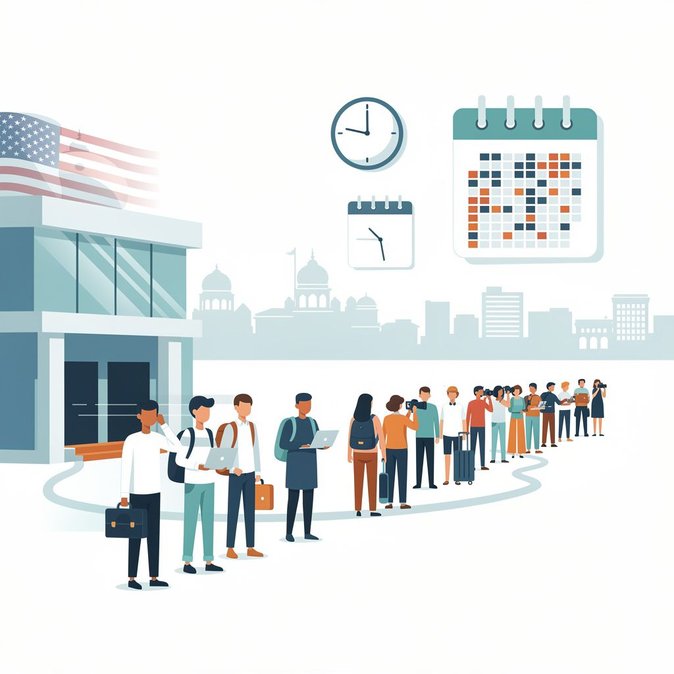
Data reviewed on 13 June by analytics site PlainVisa reveal that the US Embassy in New Delhi has slashed interview-appointment waiting times for employment (H-1B, L-1, O-1) and student (F/M/J) visas to just eight calendar days—down from six weeks in January—thanks to additional consular officers and extended Saturday shifts. By contrast, first-time B1/B2 visitor applicants still face 6.5-month average waits, with the next available slot showing at eight months. The bifurcation underscores Washington’s policy of shielding work and study mobility from pandemic-era backlogs while tourist demand recovers. For Indian IT outsourcers and US parent companies rushing October H-1B cap entrants, the improvement shaves nearly a month off door-to-door deployment. Universities welcoming the Fall 2026 cohort can tell admits that a July visa date is realistically attainable. PlainVisa cautions that the figures, sourced from the State Department’s monthly update, track only the interview-scheduling queue; administrative processing after interview can still add days. Mumbai and Hyderabad remain more congested, showing 9.5- and 7.5-month B1/B2 queues respectively. Employers should therefore retain flexibility to route staff through New Delhi where possible. Practically, travellers should check travel.state.gov daily, use the official dashboard’s ‘refresh’ at midnight IST when embassies release cancelled slots, and beware third-party agents promising shortcuts. The embassy has also reiterated that no-show rates above 15 % could trigger appointment-cancellation penalties later this year.
Source: PlainVisa