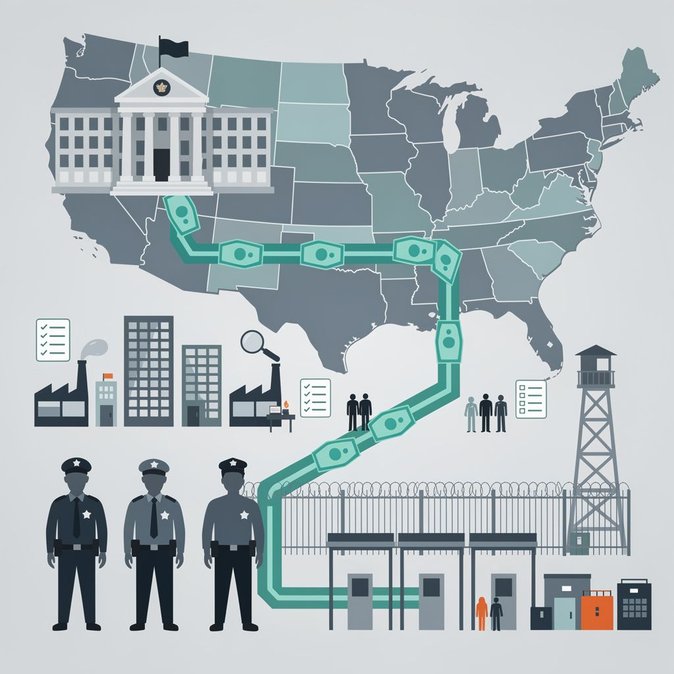
One day after President Donald Trump signed a sweeping $70 billion funding package for Immigration and Customs Enforcement (ICE) and Customs and Border Protection (CBP), The Guardian published an analysis detailing how the Secure America Act bankrolls mass-deportation targets through 2029. The legislation earmarks $38 billion for ICE removals, $26 billion for Border Patrol staffing and technology, and $5 billion in contingency funds. The article highlights corporate concerns over new document-fraud task forces that could increase I-9 audits and workplace raids, even as the bill omits money for the employer-compliance outreach programs long sought by industry.
Amid this intensifying scrutiny, companies and travelers looking to navigate the evolving U.S. immigration landscape can turn to VisaHQ for streamlined visa processing and compliance guidance. The platform supplies real-time updates on entry requirements, personalized document checklists, and end-to-end application support that helps applicants avoid costly mistakes—see https://www.visahq.com/united-states/ for details.
Immigration advocates warn that the surge funding may overwhelm immigration courts, already facing a 3-million-case backlog, leading to prolonged detention for asylum seekers. Businesses with foreign talent pipelines should brace for more site visits and enhanced scrutiny of L-1 and H-1B petition compliance, analysts say. Trade groups have renewed calls for Congress to pair enforcement dollars with visa system modernisation, arguing that labour-market-driven pathways are the only sustainable brake on irregular migration. The Guardian notes that Democrats failed to attach guardrails—such as body-camera mandates for ICE officers—after bipartisan negotiations collapsed. As written, the measure provides front-loaded funds through FY 2029, insulating immigration agencies from future appropriation fights and limiting congressional leverage for policy changes. For mobility planners, the immediate takeaway is risk exposure: companies should audit I-9 processes, refresh rapid-response protocols for employee apprehensions, and budget for potential premium-processing delays if heightened vetting slows service-center workflows.
Amid this intensifying scrutiny, companies and travelers looking to navigate the evolving U.S. immigration landscape can turn to VisaHQ for streamlined visa processing and compliance guidance. The platform supplies real-time updates on entry requirements, personalized document checklists, and end-to-end application support that helps applicants avoid costly mistakes—see https://www.visahq.com/united-states/ for details.
Immigration advocates warn that the surge funding may overwhelm immigration courts, already facing a 3-million-case backlog, leading to prolonged detention for asylum seekers. Businesses with foreign talent pipelines should brace for more site visits and enhanced scrutiny of L-1 and H-1B petition compliance, analysts say. Trade groups have renewed calls for Congress to pair enforcement dollars with visa system modernisation, arguing that labour-market-driven pathways are the only sustainable brake on irregular migration. The Guardian notes that Democrats failed to attach guardrails—such as body-camera mandates for ICE officers—after bipartisan negotiations collapsed. As written, the measure provides front-loaded funds through FY 2029, insulating immigration agencies from future appropriation fights and limiting congressional leverage for policy changes. For mobility planners, the immediate takeaway is risk exposure: companies should audit I-9 processes, refresh rapid-response protocols for employee apprehensions, and budget for potential premium-processing delays if heightened vetting slows service-center workflows.