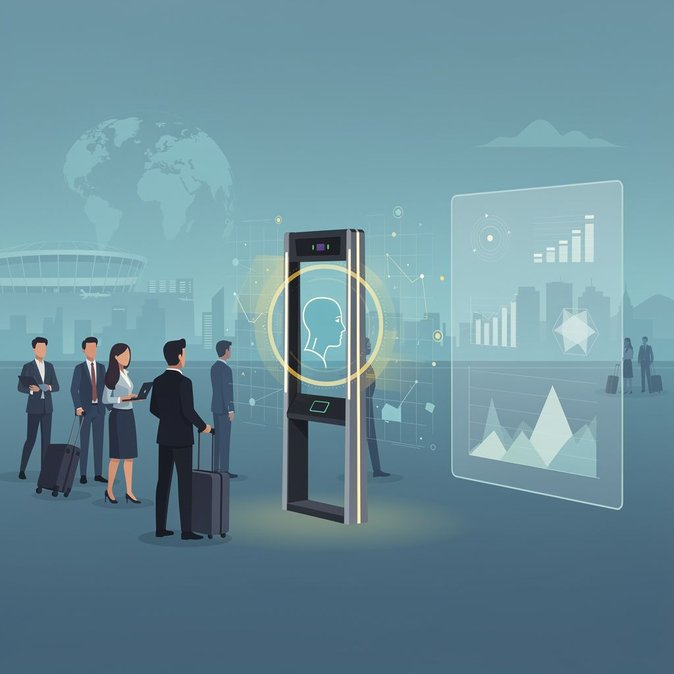
U.S. Customs and Border Protection (CBP) confirmed today that it is rolling out the largest expansion of artificial-intelligence and biometric screening technology in the agency’s history. In a briefing reported by CDO Magazine, executive director Adina Pantella said the initiative is driven by two looming mega-events that will test America’s border infrastructure: the 2026 FIFA World Cup, to be co-hosted in 11 U.S. cities, and the 2028 Los Angeles Summer Olympics. The program will extend facial-recognition “simplified arrival” gates to every Top-40 U.S. airport and all major seaports of entry by the end of 2026. CBP will also deploy mobile AI analytics that flag anomalies in traveler behavior in real time, allowing officers to intervene before a passenger reaches immigration control. Pantella emphasized that the technology is “privacy-by-design,” with images deleted within 12 hours unless a law-enforcement hit is generated. For business travelers and global mobility managers, the upgrade promises faster throughput. CBP’s pilot at Atlanta Hartsfield reduced primary-inspection times by 28 percent and cut missed connections by nearly a third, according to internal metrics. Corporate travel departments are already rewriting traveler-risk policies to account for near-instant biometric checks: employees with recent name changes or passports issued in countries under U.S. sanctions may need additional vetting before departure. The flip side is heightened compliance exposure. Multinationals that routinely shift staff across borders will need to ensure that any unresolved criminal or immigration issues are detected and resolved early—once a traveler’s face is in the system, secondary inspections will be harder to contest. Privacy-advocacy groups are pressuring CBP to publish audit data showing false-positive rates by race and nationality, warning that algorithmic bias could undercut legitimate mobility. With hundreds of thousands of international fans expected during the World Cup and millions for the Olympics, CBP argues that scaling AI now is essential. Companies running event-time hospitality programs—consultancies, sponsors, and logistics providers—should expect new pre-registration requirements for charter flights and group movements. Mobility advisers recommend building 15–20 minutes of extra buffer into itineraries until the new flows stabilize.
Source: CDO Magazine