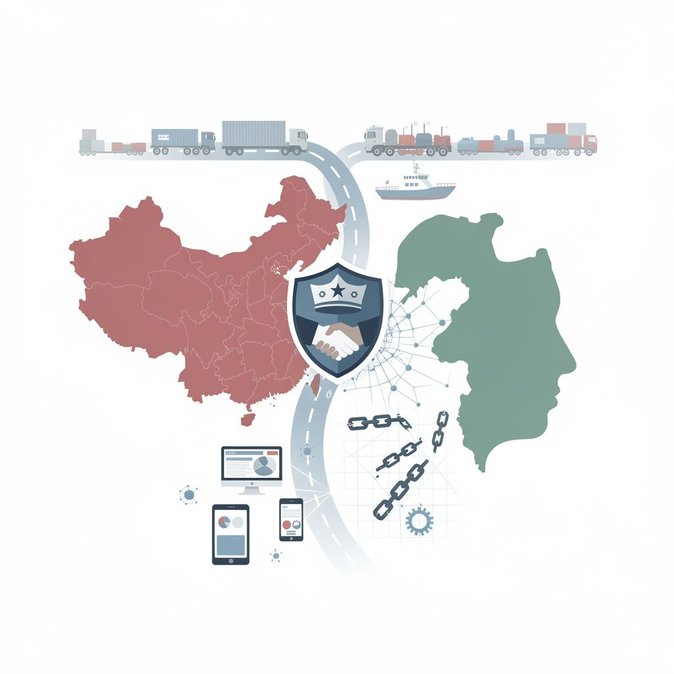
Chinese President Xi Jinping met Myanmar’s President Min Aung Hlaing in Beijing on 16 June, reaffirming China’s commitment to deepen cooperation under the China–Myanmar Economic Corridor (CMEC) while pledging joint action against cross-border online gambling and telephone-fraud syndicates that have proliferated along the porous frontier. During the talks, Myanmar’s leader vowed to work closely with China to “resolutely crack down” on criminal networks that lure Chinese nationals to scam centres in northern Myanmar. The issue has become a diplomatic flashpoint, with thousands of victims repatriated in joint police operations since late 2025. Analysts say coordinated enforcement will not only improve personal safety for travellers but also help stabilise the corridor’s logistics routes, which are essential for Chinese manufacturers moving goods through Yangon’s ports to South Asia. From a global-mobility perspective, the agreement signals tighter scrutiny of cross-border movement in Yunnan’s border prefectures. Chinese companies operating in Muse, Mandalay and Kyaukphyu should expect more frequent immigration spot-checks and potential travel-permit requirements for foreign staff entering special-risk zones. Conversely, successful suppression of fraud rings could restore confidence among corporate travellers who have avoided the region. The summit also produced a pledge to accelerate the Mandalay–Muse railway, part of CMEC’s multimodal network linking Kunming to the Indian Ocean. If financing is finalised this year, the route could shave five days off container transit times, changing freight-forwarding calculations for sectors ranging from electronics to agriculture. Enterprises with cross-border personnel should monitor implementing regulations expected from China’s National Immigration Administration and Myanmar’s Ministry of Home Affairs. In the near term, companies are advised to update traveller-risk assessments, ensure staff register with local consulates and avoid unregulated border crossings—practices that have drawn fines under China’s exit-entry law.
Source: English.gov.cn