
China’s National Immigration Administration (NIA) has issued its holiday travel forecast ahead of the three-day Dragon Boat Festival break (19–21 June). In a notice released late on 16 June and carried by several state and financial media outlets on 17 June, the NIA expects an average of 2.2 million inbound and outbound passengers per day—up 11.7 percent on last year’s festival and close to the peaks seen during the May Day holiday. Airports will shoulder much of the load: Shanghai Pudong, Beijing Capital, Guangzhou Baiyun, Shenzhen Bao’an, Beijing Daxing and Chengdu Tianfu are each projected to handle between 17,000 and 104,000 international passengers daily. On the land side, the busiest crossings will again be in the Greater Bay Area, where dragon-boat races and family visits are fuelling demand. Shenzhen’s Luohu, Futian and Shenzhen Bay checkpoints are forecast at a combined 70,000–80,000 passengers per hour during the early-morning surge, while Zhuhai’s Gongbei and the Hong Kong–Zhuhai–Macao Bridge could see single-day throughput of more than 370,000. To cope, border-inspection units have been ordered to extend opening hours, activate all inspection booths, and publish real-time wait-time alerts through WeChat and local media. Contingency plans also call for rapid redeployment of officers if heavy rainfall—common in South China in mid-June—disrupts transport links. For corporate travellers, the operational advice is to build extra margin into flight and ground-transfer schedules, use e-gates where eligible, and carry printed hotel bookings to speed secondary inspections. Companies moving time-critical cargo across the Hong Kong and Macau land borders have been advised to pre-book “green channel” slots and to monitor weather advisories closely. The Dragon Boat Festival is traditionally the first major travel peak of the summer. This year’s projections, coming on top of the 10 million-traveller milestone already passed by Beijing, suggest that China’s cross-border mobility is rapidly normalising—good news for multinationals restarting rotation programmes and short-term assignment travel.
Source: Securities Times
How VisaHQ can help
VisaHQ simplifies the visa application process for individuals and businesses. Check current travel requirements, prepare the required documents and manage your application online through the VisaHQ China portal.More From China
View all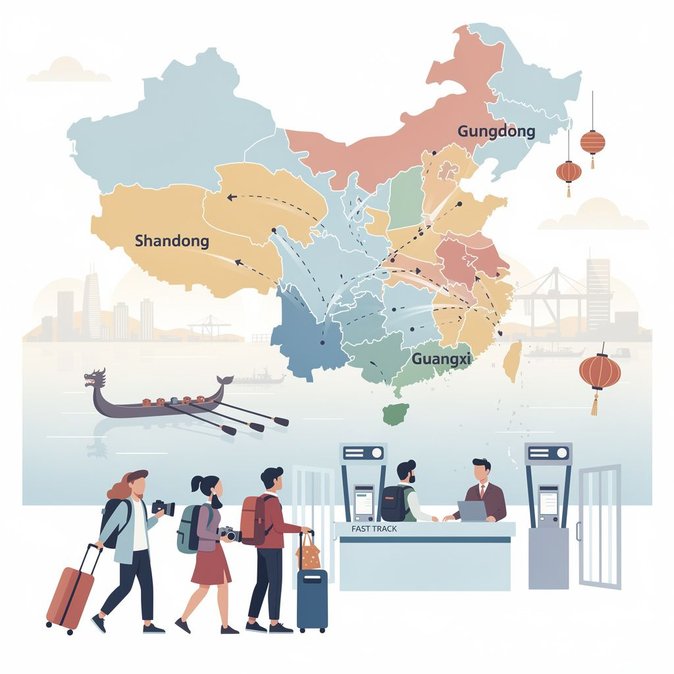
Ports brace for holiday surge as foreign tour groups ‘rediscover’ China’s Dragon Boat culture

China expects record 2.2 million border crossings per day during Dragon Boat Festival