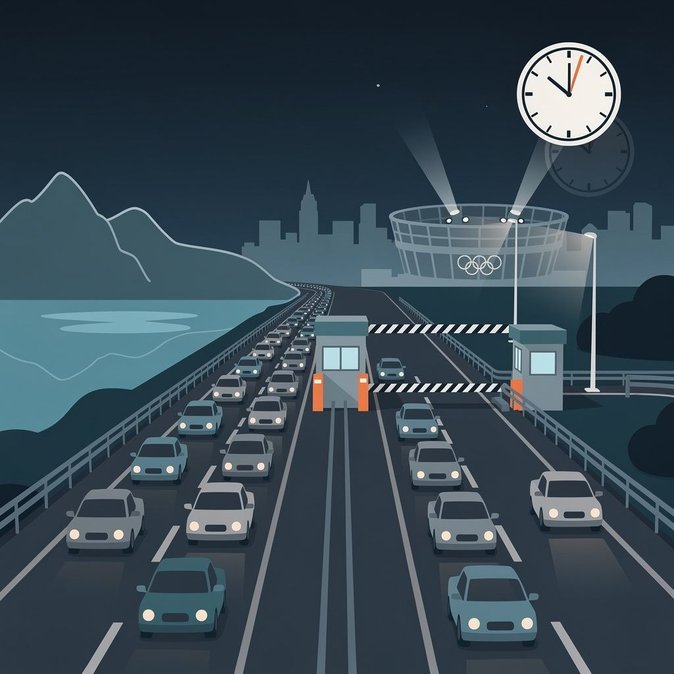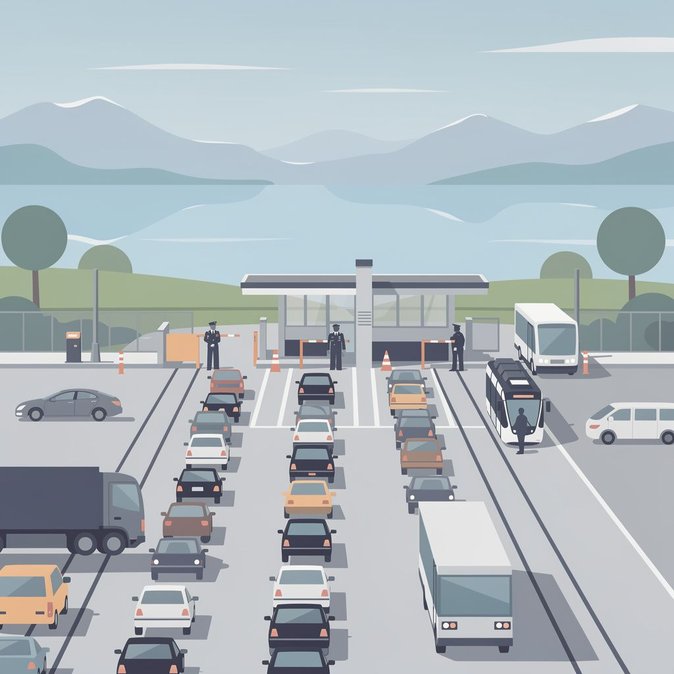
The final day of the Évian-les-Bains G7 summit saw cross-border mobility around Lake Geneva grind to a crawl. French authorities kept only seven of the usual 32 road crossings with Switzerland open, part of the tight security cordon protecting heads of state gathered 10 km away on the French shore. The result was bumper-to-bumper queues stretching more than 12 km on the Swiss side of the Bardonnex and Ferney-Voltaire checkpoints, prompting Geneva’s public-transport operator TPG to cut its peak-hour bus and tram offer by 7 %. TPG spokeswoman Isabel Pereira said the measure—430 vehicles down to 400—was needed to avoid ‘network paralysis’. Cross-border routes 80, 57, 67, 68 and 71 were truncated or diverted, while tram 12 ran only inside Switzerland. Swiss customs warned commercial lorries of wait times exceeding three hours, forcing freight forwarders to reroute via the Mont-Blanc tunnel, adding 185 km to deliveries bound for Lyon. For the tens of thousands of French residents who work in Geneva’s banking and life-sciences clusters, the disruption translated into missed meetings and overtime costs. Multinationals such as Procter & Gamble offered remote-work allowances and urged staff to avoid peak crossings until the border posts reopen overnight from Thursday to Friday. Geneva Airport remained operational but reported minor delays for delegations departing after the summit’s closing communiqué. The summit has served as a dry-run for France’s security playbook ahead of the 2027 World Expo in Lyon, when similar temporary Schengen-internal checks are expected. Yet local mayors on both sides of the border criticised what they call ‘one-size-fits-all’ restrictions that ignore the daily reality of frontier workers who contribute an estimated CHF 6 billion to Geneva’s GDP. French prefect Jean-Philippe Lecoustre defended the measures, citing a ‘heightened terror threat’. Still, he acknowledged the economic hit and pledged a joint evaluation with Swiss counterparts to refine future protocols. Businesses with cross-border staff should review telework policies and build extra transit buffers whenever major summits are scheduled in the Franco-Swiss region.
Source: Léman Bleu TV