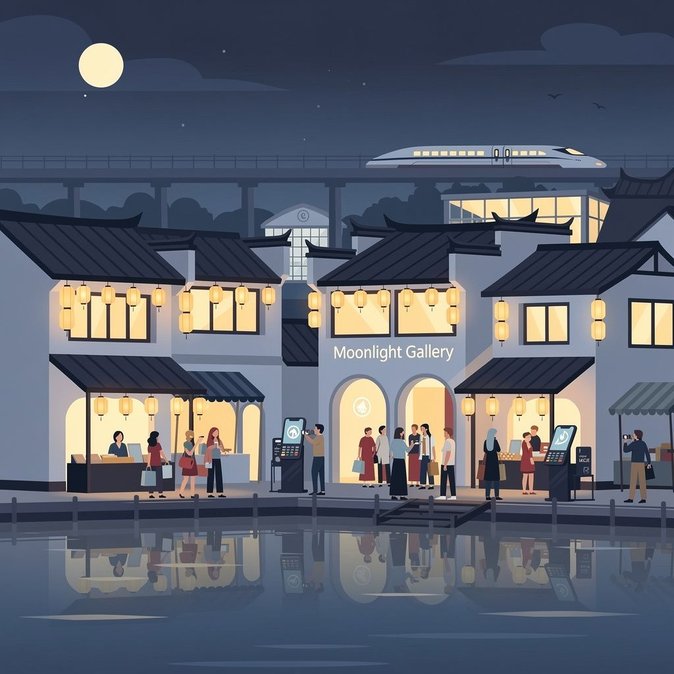
Tourism officials in Jiangsu were all smiles on 19 June as Huishan Ancient Town’s new Moonlight Gallery night bazaar officially opened to coincide with the Dragon Boat Festival. During a soft launch the previous evening, the riverside market welcomed busloads of foreign residents from Shanghai and Suzhou, many making their first leisure trip to the region thanks to China’s expanded 240-hour visa-free transit scheme.
Travelers who find that the 240-hour window isn’t quite enough, or who need a different visa type for future trips, can navigate the application process quickly through VisaHQ’s digital portal. The service offers real-time status updates, document checks and courier support for multiple Chinese visa categories, smoothing the leap from a short stopover to an extended stay; learn more at https://www.visahq.com/china/
The bazaar – open 17:00–21:00 on weekends and holidays – mixes traditional Jiangnan handicrafts with cashless payment kiosks that accept Alipay+ and overseas Visa cards, eliminating the once-common hurdle of mobile-wallet registration for short-stay visitors. Event promoter Yingyueli Cultural Tourism Group said 22 percent of opening-night sales were to foreign passport holders, triple the proportion recorded at comparable markets in 2024. For destination marketers, Wuxi’s success offers a blueprint: leverage historic waterfronts, extend nighttime operating hours and integrate payment infrastructure that works for inbound travellers. Several local hotels have bundled “bazaar access” into corporate off-site packages, reflecting a broader trend of mixing business meetings with cultural experiences to satisfy duty-of-care and ESG criteria. From a mobility standpoint, the site is a ten-minute walk from Wuxi’s new high-speed rail stop on the Shanghai–Nanjing intercity line, reinforcing how improved rail connectivity is reshaping weekend visitor flows. City authorities plan to add a bilingual tourist-police kiosk and searchable e-guide in July to support the expected summer influx. Although a niche story compared with nationwide travel volumes, Wuxi’s waterfront renaissance highlights the tangible dividends of China’s post-pandemic visa facilitation measures for second-tier cities competing for international footfall.
Travelers who find that the 240-hour window isn’t quite enough, or who need a different visa type for future trips, can navigate the application process quickly through VisaHQ’s digital portal. The service offers real-time status updates, document checks and courier support for multiple Chinese visa categories, smoothing the leap from a short stopover to an extended stay; learn more at https://www.visahq.com/china/
The bazaar – open 17:00–21:00 on weekends and holidays – mixes traditional Jiangnan handicrafts with cashless payment kiosks that accept Alipay+ and overseas Visa cards, eliminating the once-common hurdle of mobile-wallet registration for short-stay visitors. Event promoter Yingyueli Cultural Tourism Group said 22 percent of opening-night sales were to foreign passport holders, triple the proportion recorded at comparable markets in 2024. For destination marketers, Wuxi’s success offers a blueprint: leverage historic waterfronts, extend nighttime operating hours and integrate payment infrastructure that works for inbound travellers. Several local hotels have bundled “bazaar access” into corporate off-site packages, reflecting a broader trend of mixing business meetings with cultural experiences to satisfy duty-of-care and ESG criteria. From a mobility standpoint, the site is a ten-minute walk from Wuxi’s new high-speed rail stop on the Shanghai–Nanjing intercity line, reinforcing how improved rail connectivity is reshaping weekend visitor flows. City authorities plan to add a bilingual tourist-police kiosk and searchable e-guide in July to support the expected summer influx. Although a niche story compared with nationwide travel volumes, Wuxi’s waterfront renaissance highlights the tangible dividends of China’s post-pandemic visa facilitation measures for second-tier cities competing for international footfall.