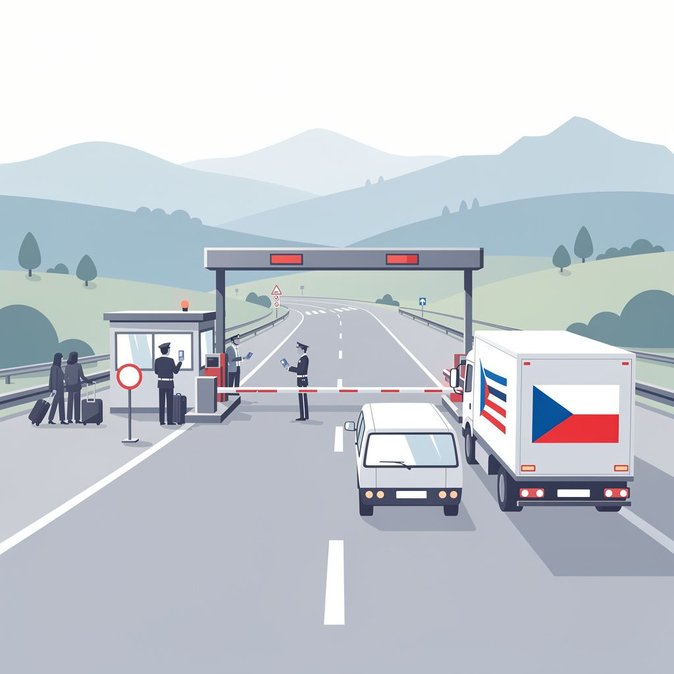
Although Schengen rules allow only exceptional border checks, 2026 is shaping up to be another year of rolling extensions. Vienna and Ljubljana both notified Brussels of fresh prolongations that overlap Czech freight and business-travel corridors. Austria’s controls on its land border with Czechia, initially justified by irregular migration on the Balkan route, formally expired on 15 June 2026 but were extended de facto via an ‘administrative stand-by’ period that runs through 30 June. Slovenia, citing security risks linked to the Winter Olympics in Italy and regional organised-crime threats, will maintain checks on its Croatian and Hungarian borders until 21 June—the day after the Czech Republic’s World Refugee Day events spur additional cross-border coach traffic. For Czech trucking companies heading to Adriatic ports, the upshot is slower crossings at Spielfeld (A) and Obrežje (SI). The Czech Association of Road Transport Operators (ČESMAD) reports average waits of 45 minutes for TIR cargos last week, double the pre-controls norm. Passenger vehicles face spot ID checks but no systematic lane segregation. Supply-chain managers are advised to use the Schengen ‘Temporary Border Controls’ dashboard published by the European Commission, which now updates in near real time. Drivers should carry both physical and digital copies of A1 social-security forms, which Austrian police increasingly verify during identity checks. While the measures do not breach EU law—member states can roll over controls in six-month blocks—the Czech Foreign Ministry says it will push for a coordinated exit plan at the next Justice and Home Affairs council. Until then, expect sporadic queues, especially around the 20 June long weekend when holiday traffic peaks.