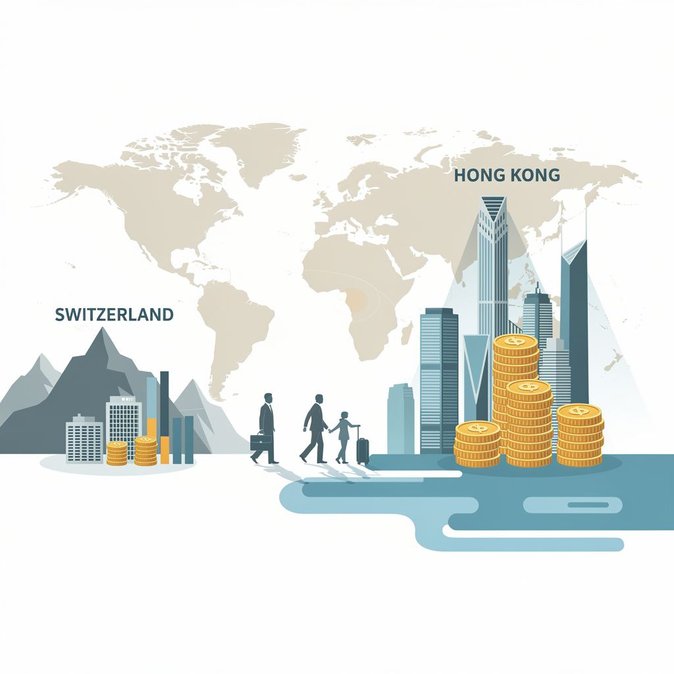
A feature published by El País on 20 June cites new Boston Consulting Group data showing that Hong Kong has inched past Switzerland to become the largest centre for offshore wealth management, hosting US$2.9 trillion in cross-border assets in 2025 – a 10.7 per cent year-on-year jump. Mainland Chinese clients now account for almost 60 per cent of those inflows. The milestone underscores how geopolitical fragmentation is reshaping the map of private banking. As Western jurisdictions tighten scrutiny on Chinese capital, high-net-worth individuals are routing funds through Hong Kong, taking advantage of the city’s common-law framework and deep capital markets while retaining proximity to domestic business interests. BCG forecasts Hong Kong will widen its lead by US$600 billion by 2030 if current trends hold. For global-mobility practitioners the shift has practical implications: private banks and family offices are accelerating executive relocations to the SAR, fuelling demand for talent visas under Hong Kong’s Top Talent Pass Scheme and Quality Migrant Admission Scheme. Real-estate consultancies report that serviced-apartment occupancy by financial expatriates in Central has climbed five percentage points since January. Regulatory risk remains. Beijing in May launched a crackdown on unauthorised outbound investment platforms, and analysts interviewed by El País warn that tighter mainland capital-controls could slow the money flow and, by extension, the pace of new expatriate assignments. Mobility managers should monitor any new requirements for outbound-investment filings that could delay relocation timelines or compensation structures tied to offshore asset performance.
Source: El País