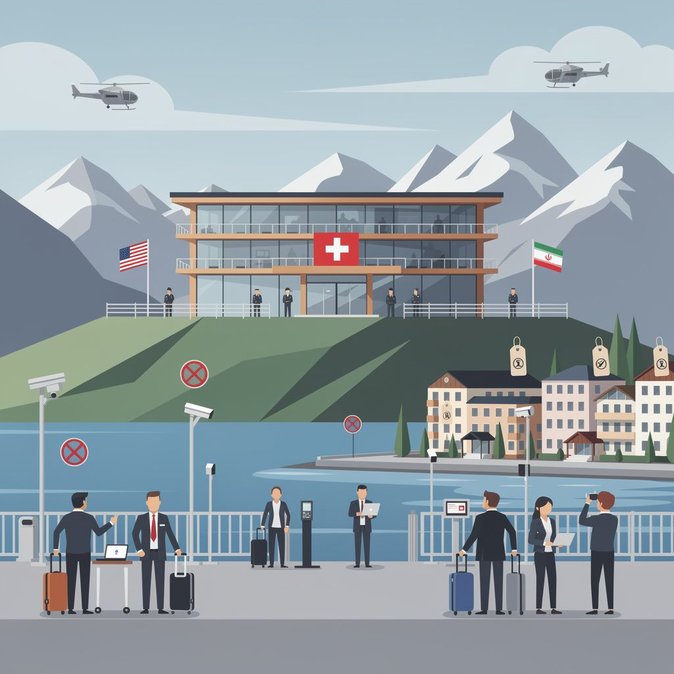
High-stakes negotiations between the United States and Iran opened on Sunday, 21 June 2026, at the secluded Bürgenstock Resort above Lake Lucerne. The Swiss Federal Department of Foreign Affairs confirmed the arrival of U.S. Vice-President JD Vance and Iranian parliamentary speaker Mohammad Bagher Ghalibaf, with Pakistan and Qatar acting as co-mediators. To safeguard the talks, the Federal Council enacted a special ordinance authorising the army to support cantonal police and allowing the Federal Office for Civil Aviation to impose temporary flight restrictions over central Switzerland. Private drone flights are banned within a 30-kilometre radius, and scheduled lake-steamer services were rerouted to alternative piers.
During periods of heightened security and rapidly evolving travel rules, VisaHQ can ease the administrative burden for both individual travellers and corporate mobility managers. Its dedicated Swiss portal (https://www.visahq.com/switzerland/) provides real-time updates on visa obligations, passport-validity requirements and other entry formalities, and can arrange expedited processing so delegates reach Lucerne without last-minute paperwork surprises.
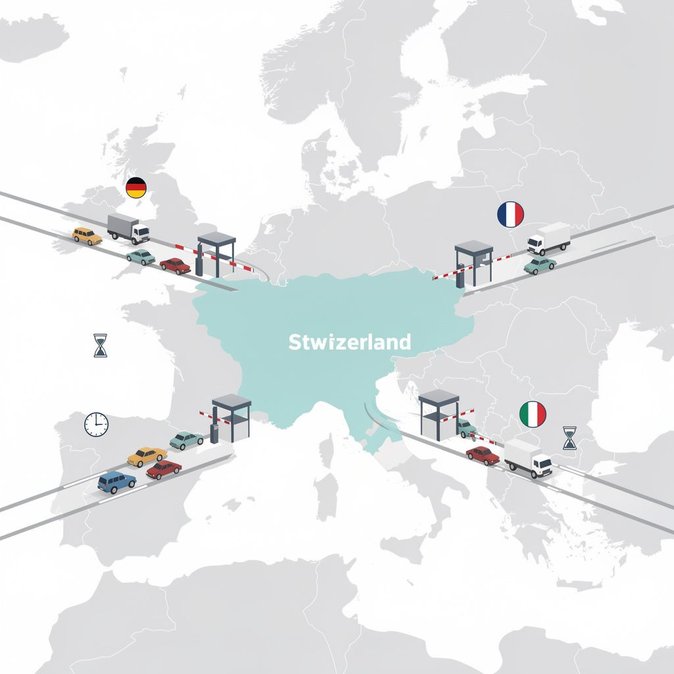
Travellers headed for Luzern or Engelberg found additional ID checks on motorway exits and at the Lucerne rail hub. Hoteliers in the region report full occupancy, driven by security entourages and foreign press. Several multinational firms with expatriate executives in Zug and Zurich advised staff to anticipate road closures on the A2 motorway and to carry passports even for domestic journeys—an unusual step inside the Schengen zone. For Switzerland, the summit reinforces its traditional role as neutral broker but also strains local infrastructure at the height of conference season. Mobility managers should brief travellers on the Restricted Aerial Zone (RAZ) NOTAM in effect until 24 June and budget extra transfer time from Zurich Airport. While diplomatic outcomes remain uncertain, the operational impact is immediate: tighter border-control posture, episodic traffic holds and premium-rate accommodation—cost factors global-mobility teams must absorb when dispatching staff to central Switzerland this week.
During periods of heightened security and rapidly evolving travel rules, VisaHQ can ease the administrative burden for both individual travellers and corporate mobility managers. Its dedicated Swiss portal (https://www.visahq.com/switzerland/) provides real-time updates on visa obligations, passport-validity requirements and other entry formalities, and can arrange expedited processing so delegates reach Lucerne without last-minute paperwork surprises.
Travellers headed for Luzern or Engelberg found additional ID checks on motorway exits and at the Lucerne rail hub. Hoteliers in the region report full occupancy, driven by security entourages and foreign press. Several multinational firms with expatriate executives in Zug and Zurich advised staff to anticipate road closures on the A2 motorway and to carry passports even for domestic journeys—an unusual step inside the Schengen zone. For Switzerland, the summit reinforces its traditional role as neutral broker but also strains local infrastructure at the height of conference season. Mobility managers should brief travellers on the Restricted Aerial Zone (RAZ) NOTAM in effect until 24 June and budget extra transfer time from Zurich Airport. While diplomatic outcomes remain uncertain, the operational impact is immediate: tighter border-control posture, episodic traffic holds and premium-rate accommodation—cost factors global-mobility teams must absorb when dispatching staff to central Switzerland this week.